

Quick Summary
•What it means: Too much air, not enough fuel on cylinder bank 2
•Most common cause: Vacuum leak or a dirty/failing MAF sensor
•Applies to: V6, V8, V10, V12, and flat/boxer engines with two cylinder banks
•Drivability: Usually drivable short-term, not recommended long-term
•Typical repair cost: $100–$800+, depending on the root cause
What Does Code P0174 Mean?
P0174 stands for “System Too Lean (Bank 2)”. It sets when the engine control module detects that cylinder bank 2 is running with too much air and not enough fuel, relative to the ideal 14.7:1 air-fuel ratio.
The ECM tries to correct this with long-term fuel trim. Once that trim climbs past roughly +20–25% and stays there, the ECM can’t compensate any further, and P0174 sets.
P0174 vs. P0171: What’s the Difference?
| P0171 | P0174 | |
|---|---|---|
| Cylinder bank | Bank 1 (the side with cylinder #1) | Bank 2 (the side without cylinder #1) |
| Oxygen sensor that triggers it | Bank 1 upstream O2 sensor | Bank 2 upstream O2 sensor |
| Applies to | Any engine with two banks |
Any engine with two banks |
Both codes mean the same thing — too much air, not enough fuel — just on opposite sides of the engine. If only one of the two codes is present, the problem is likely isolated to that specific bank, such as a vacuum leak or injector issue on that side. If both P0171 and P0174 show up together, the cause is almost always something that affects the whole engine rather than one bank specifically — most commonly a failing MAF sensor (since all incoming air passes through it before splitting to both banks) or a vacuum leak upstream of where the intake divides. This distinction is one of the fastest ways to narrow down a diagnosis before touching any parts.
Common Symptoms of the P0174 Code
•Check engine light on
•Rough idle or hesitation during acceleration
•Reduced engine power
•Poor fuel economy
•Engine misfires
•Symptoms often more noticeable at lower speeds and RPM
Common Causes of the P0174 Code
| Cause | What’s Happening |
|---|---|
| Vacuum or intake air leak | A cracked hose, leaking intake manifold gasket, or loose PCV connection lets unmetered air into bank 2 |
| Dirty or failing MAF sensor | Under-reports incoming airflow, so the ECM injects less fuel than needed |
| Exhaust leak upstream of the O2 sensor | Draws in outside air before the sensor, triggering a lean code |
| Faulty or clogged fuel injectors | Can’t deliver enough fuel to maintain the correct ratio |
| Low fuel pressure | A weak fuel pump or clogged fuel filter restricts delivery |
| Skewed MAP sensor | An inaccurate reading can trigger P0174 even if the MAF shows no fault |
| Contaminated or poor-quality fuel | Can affect injector performance |
| PCM software issue | Rare — an outdated fuel map can cause under-fueling as the engine wears |
How Serious Is the P0174 Code?
P0174 is generally moderate severity. Most vehicles stay drivable, and many owners won’t notice a dramatic difference. But a prolonged lean condition can cause misfires, which push unburned fuel into the catalytic converter and can damage it — a repair that often runs $1,000 or more. If the check engine light is flashing rather than steady, that signals an active misfire. Stop driving and get it checked right away.
P0174 Code Bank 2 Location
Bank 2 is the cylinder bank that doesn’t contain cylinder #1. On most V6/V8/V10/V12 engines, manufacturers alternate odd cylinders on one bank and even on the other, so bank 2 typically starts with cylinder #2. Ford is an exception — it uses sequential rather than alternating numbering, so always confirm against a firing order diagram for your specific engine rather than assuming.
On boxer/flat engines (some Subaru and Porsche models), the same bank 1/bank 2 system applies to the two opposing cylinder rows.
How to Fix P0174 Code
1.Check for other codes first
If P0171 is also present, prioritize whole-engine causes like the MAF sensor or a vacuum leak.
2.Inspect for vacuum leaks
Check PCV hoses, the intake boot, and intake manifold gasket. A smoke machine finds leaks that aren’t visible or audible.
3.Clean or replace the MAF sensor
Check for contamination, especially with oiled aftermarket air filters.
4.Test fuel pressure against factory specifications
5.Inspect fuel injectors on bank 2 for clogs or underperformance
6.Check for an exhaust leak upstream of the bank 2 oxygen sensor
7.Clear the code and test drive at least 10–15 miles to confirm the fix holds
Fixing the code without addressing the root cause is only temporary — P0174 returns once fuel trim climbs past the threshold again.
How to Diagnose P0174
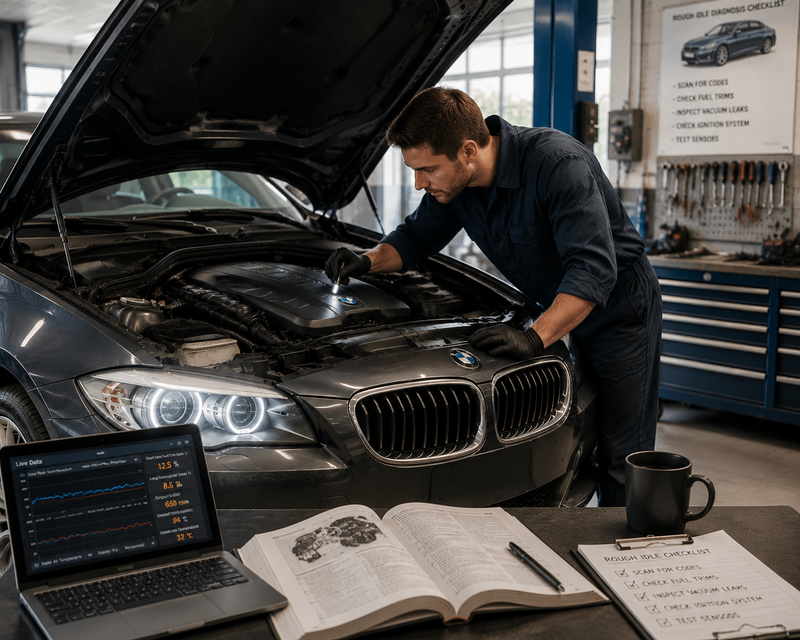
The code alone only tells you that bank 2 is running lean, not why. A real diagnosis means:
1.Pull freeze frame data
— RPM, load, and coolant temperature when the code set.
2.Review fuel trim values
Both short and long-term, for bank 2. Long-term trim consistently above roughly +10% points to a lean condition worth investigating.
3.Monitor live O2 sensor and MAF data
For readings that don’t respond normally to load and RPM changes.
4.Run a smoke test
On the intake system to confirm vacuum leaks visually.
5.Compare bank 1 vs. bank 2 fuel trim
Similar trim on both banks points to a global cause like the MAF sensor; bank 2 alone points to something specific to that side.
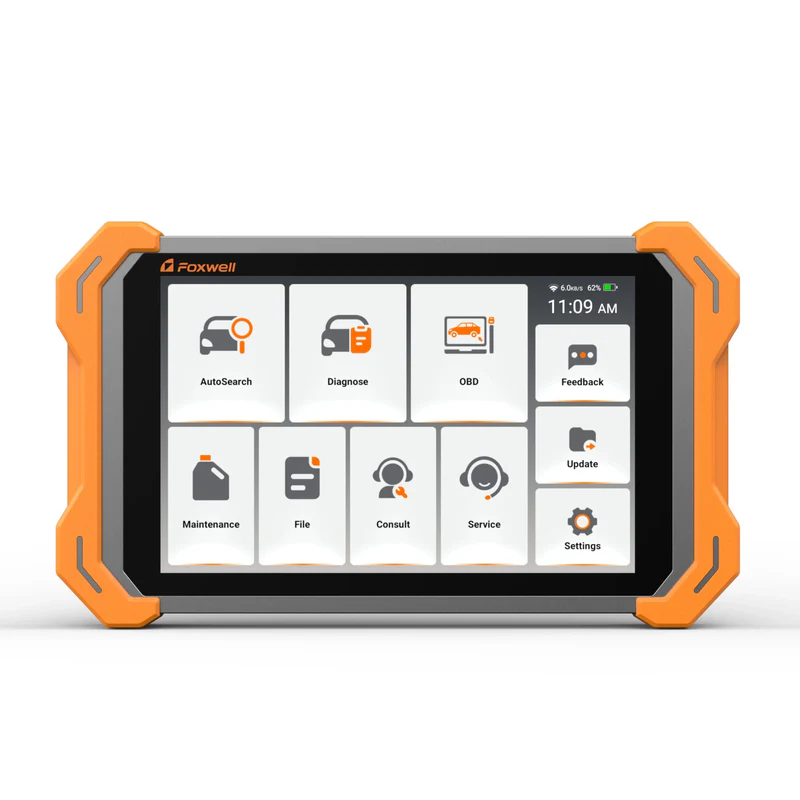
Why the right scan tool matters here: Steps 2 and 3 are where most DIY diagnoses go wrong — you can’t fix what you can’t see. The Foxwell NT530 Plus streams live fuel trim and O2 sensor data from both banks side by side, in graph form, so a stuck or slow-responding sensor is obvious at a glance instead of buried in a column of numbers. It also runs bidirectional tests across the full vehicle system, so if the lean condition traces back to something outside the fuel system, you catch it in the same session instead of needing a second tool.
How Much Does P0174 Cost to Fix?
| Repair | Typical Cost |
|---|---|
| MAF sensor cleaning | $15–$100 |
| MAF sensor replacement | $100–$400 |
| Vacuum leak repair (hose/gasket) | $100–$300 |
| Fuel injector cleaning | $50–$200 |
| Fuel injector replacement | $200–$600 |
| Oxygen sensor replacement | $100–$400 |
| Fuel pump replacement | $300–$800 |
| Diagnostic fee (shop) | $75–$150 |
Most P0174 repairs land between $150 and $800. Costs can exceed $1,000 if the fuel pump needs replacing or the catalytic converter was damaged by prolonged misfiring. Cleaning the MAF sensor yourself is the cheapest starting point and, on many vehicles, resolves the code entirely — a $15–$20 can of MAF cleaner and 10 minutes is worth trying before replacing any parts.
P0174 on Specific Vehicles
| Brand / Model | Commonly Reported Cause |
|---|---|
| Ford F-150 | Intake manifold leaks or faulty PCV hoses |
| Ford (4.6L/5.4L V8) | Often sets alongside P0171; MAF sensor or vacuum leak affecting both banks |
| Chevrolet Silverado 1500 | Intake gasket failure |
| Chevrolet Tahoe / Impala | Similar causes to Silverado, lower frequency |
| GMC Sierra | One of the most frequently reported GMC models for this code |
| Toyota Camry | MAF sensor and vacuum leaks |
| Toyota Sienna / Highlander | Shares platform/engine architecture with Camry |
| Nissan Altima | Highest incident rate among Nissan models |
| Nissan Maxima / Murano | Moderate frequency |
| Honda Civic | Dirty fuel injectors or MAF-related issues |
Regardless of make, start with vacuum leaks and the MAF sensor — they’re the most frequently confirmed causes across every brand above.
Conclusion
P0174 means cylinder bank 2 is running too lean, most often from a vacuum leak or a dirty/failing MAF sensor. It’s usually safe to drive short-term, but a prolonged lean condition risks misfires and expensive catalytic converter damage. Start with the cheapest, most common causes before moving to injectors, fuel pressure, or oxygen sensors, and confirm any fix with live fuel trim data rather than just clearing the code and hoping.
Diagnosing at home?
Skip the guesswork. The Foxwell NT301 gives you live data graphing for basic fuel trim and O2 checks at an entry-level price, while the NT530 Plus adds bidirectional testing and full-system access for tracing a lean code that turns out to be something bigger than a bad sensor.
FAQ
Is it safe to drive with P0174?
Short-term, yes. Most vehicles stay drivable with no dramatic change in how they run. Long-term, no — a prolonged lean condition can cause misfires and damage the catalytic converter. If the check engine light is flashing, stop driving and get it checked immediately.
What causes P0171 and P0174 at the same time?
When both codes appear together, the cause is almost always something upstream of where the intake splits to both banks — most commonly a failing MAF sensor or a vacuum leak before the intake divides. A cause specific to just one bank, like a single injector or a bank-specific vacuum leak, would only trigger one of the two codes, not both.
How does a faulty fuel pump cause a P0174 code?
A weak fuel pump can’t maintain adequate fuel pressure. With less fuel reaching the injectors than the engine needs, the air-fuel mixture skews lean, and the ECM logs P0174 once it can’t compensate through fuel trim alone. Testing fuel pressure against factory spec is a standard step in ruling this in or out.
Can a misfire cause a P0174 code?
Yes. A misfire leaves unburned oxygen in the exhaust, which the O2 sensor can read as a lean condition even if the actual air-fuel mixture reaching the cylinder was correct. This means P0174 doesn’t always point to an air or fuel delivery problem — it’s worth checking for misfire-related codes (like P0300-series codes) alongside it.
Can an O2 sensor cause a P0174 code?
Yes. A degraded or skewed oxygen sensor can report a lean condition that isn’t actually happening, or fail to accurately track the real air-fuel ratio. This is why live O2 sensor data — not just the stored code — is part of a proper diagnosis, rather than assuming the mixture itself is at fault.
Can a clogged fuel filter cause P0174?
Yes. A clogged filter restricts fuel flow to the injectors the same way a weak fuel pump does, reducing the amount of fuel reaching the engine and pushing the mixture lean. It’s a common, low-cost cause worth ruling out alongside fuel pressure testing.

Leave a comment
This site is protected by hCaptcha and the hCaptcha Privacy Policy and Terms of Service apply.