

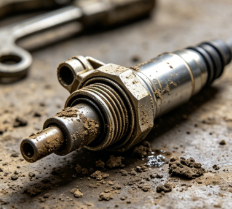
Key Takeaways
- - Dirty fuel injectors affect spray pattern, not just fuel flow, leading to poor combustion and performance loss
- - Fuel injector cleaners (additives) work for light deposits but are limited for deeper issues
- - Professional cleaning or injector cleaning machines are more effective for moderate to severe buildup
- - Cleaning alone does not confirm injector health — testing is the only way to verify performance
What Happens When Fuel Injectors Get Dirty
Fuel injectors are responsible for delivering a precise amount of fuel into the engine in a fine mist. When they are clean, the spray pattern is even and atomized, allowing the fuel to mix properly with air and burn efficiently.
When injectors become dirty, this spray pattern changes.
Instead of a fine mist, the fuel may come out as uneven streams, partial sprays, or even droplets. This disrupts the air-fuel mixture and leads to incomplete combustion.
Over time, this causes:
- Reduced engine efficiency
- Increased fuel consumption
- Higher emissions
- Noticeable performance issues

The image compares the injection patterns of clean and dirty injectors.
Dirty injectors don’t just reduce fuel flow — they reduce fuel quality at the point of combustion.
Common Symptoms of Dirty Fuel Injectors
Below are the most frequent symptoms, in order of how commonly they occur:
- Rough Idling
Uneven or inconsistent idle with bouncing RPM, shaking, or feeling like the engine may stall at a stop.
- Engine Misfires & Vibrations
Clogged injectors starve cylinders of fuel, causing misfires, hesitation, sputtering, or vibration under acceleration.
- Sharp Drop in Fuel Economy (MPG)
Poor atomization leads to inefficient burning. The ECU adds extra fuel to compensate, drastically increasing consumption.
- Hard Cold Starts / Slow Cranking
Dirty injectors fail to deliver the precise air-fuel mix needed for startup, leading to long cranking or delayed firing.
- Check Engine Light (CEL)
Common codes: P0300–P0308 (cylinder misfires); P0171 (system too lean)
- Fuel Odors (Leaking Injectors)
A stuck-open injector releases raw fuel, creating a strong gas smell. This can wash cylinder oil, increase wear, and pose fire risks.
Symptom Quick-Check Table
| Symptom | Severity | Primary Cause |
|---|---|---|
| Rough Idle | Low | Minor carbon buildup on the nozzle, disrupting fuel spray. |
| Poor MPG (Fuel Economy) | Medium | Improper fuel atomization; ECU compensates by injecting more fuel. |
| Engine Misfiring | Medium | Significant blockage or inconsistent fuel delivery to cylinders. |
| Check Engine Light (CEL) | Medium/High | Misfire codes (P0300-P0308) or lean codes (P0171/P0174) triggered by fuel delivery issues. |
| Hard Start / No-Start | High | Severe clogging or leak preventing the correct air-fuel ratio needed for ignition. |
| Gas Smell | High |
Injector is leaking or stuck open, releasing unburned fuel into the intake or engine bay. |
What Causes Fuel Injectors to Get Dirty
- Fuel Heat Soak (Top Cause)
After engine shutdown, residual heat evaporates fuel inside the injector nozzle, leaving waxy olefins that harden into carbon varnish, narrowing openings and ruining spray patterns.
- Low-Quality Fuel & Insufficient Detergents
Cheap, unbranded fuel lacks strong detergents found in Top Tier gasoline. Without cleaning additives, carbon deposits form crusts on injector tips and restrict flow.
- Ethanol Blends & Moisture
Ethanol (E10/E15) absorbs water, causing internal corrosion. It also breaks down into gummy residue that can stick the injector pintle, leading to slow or stuck operation.
- Carbon Buildup from Combustion
Engine heat and unburnt fuel create carbon deposits that accumulate on both internal and external injector surfaces, blocking spray holes.
- Short Trip Driving
Frequent short trips prevent the engine from reaching full operating temperature, so deposits cannot burn off and accumulate much faster.
- Stale or Old Fuel
Fuel that sits unused oxidizes over time, leaving varnish-like residue that coats injector components.
- Engine Blow-By & PCV Vapors
Oil vapor and unburnt fuel from blow-by or PCV recirculation coat injector tips and bake into thick carbon under cylinder heat.
- Clogged or Failing Fuel Filter
A worn filter cannot trap sediment or rust from the fuel tank, allowing debris to lodge in injectors — often requiring professional cleaning.
Can You Still Drive With Dirty Fuel Injectors?
- With mild, early symptoms
You may experience only rough idle, slight hesitation, or a small drop in MPG. Short, light driving is usually possible, but deposits will continue to build up.
-
With obvious, advanced symptoms
If you notice consistent misfires, strong engine vibration, hard starting, poor acceleration, or a lit Check Engine light, the condition is no longer minor. Continuing to drive puts additional stress on the engine.
- Increased engine wear
- Damage to the catalytic converter
- Permanent fuel system issues
- Much higher repair costs later
How to Clean Dirty Fuel Injectors (3 Methods Compared)
There are three common ways to clean fuel injectors, each with different levels of effectiveness.
| Method | Best For | How It Works | Pros | Cons |
|---|---|---|---|---|
| Fuel Additive / In-Tank Cleaner | Light buildup, preventive maintenance, mild symptoms |
Pour cleaner into the gas tank; it mixes with fuel and dissolves light deposits as you drive. |
Cheap, easy, no tools needed | Only effective for minor carbon buildup; does not work on heavy clogs |
| Professional Fuel Induction Service | Moderate to heavy deposits, rough idle, reduced MPG | A shop uses specialized equipment to flush the injectors, intake, and valves under pressure. | Strong cleaning power, noticeably improves performance | Expensive, requires a mechanic |
| Injector Cleaning & Testing Tools | DIY users & shops — heavy clogs, uneven flow, testing + cleaning | Connect directly to injectors for pressurized cleaning, plus spray pattern inspection and flow testing. | Visual confirmation, deep cleaning, reusable, combines testing and cleaning | Higher upfront cost, but saves money long-term vs. repeated shop services |
Which Method Should You Choose?
Choosing the right method depends on how serious your injector issue is:
-
If your car runs fine and you just want maintenance →
A fuel additive is enough. -
If you're experiencing rough idle, poor fuel economy, or hesitation →
A professional fuel injection service can help restore performance. -
If you have persistent issues like misfires, uneven engine behavior, or repeated injector problems →
A fuel injector cleaner & tester is the most reliable option.
Why Cleaning Alone Isn’t Always Enough
Most methods focus only on cleaning — but they don’t actually tell you whether the injector is working properly.
For example, even after cleaning:
- An injector may still be weak
- The spray pattern may remain uneven
- Fuel delivery can be inconsistent between cylinders
This is why some problems come back shortly after basic cleaning. In reality, cleaning removes deposits — but it doesn’t verify performance. If symptoms persist, testing becomes essential.
In many cases, testing matters more than cleaning, because only proper testing can confirm whether an injector is delivering fuel as designed. This is where injector testing tools become especially valuable — they allow you to see exactly how each injector performs, instead of relying on guesswork.
Learn how to check fuel injectors with OBD2 scanner to identify the real issue before replacing parts.
The Key Difference: Cleaning vs. Testing
The biggest limitation of additives and shop services is: You can’t see what’s happening inside the injector
With injector testing tools, you can:
- Visually inspect spray pattern
- Compare fuel flow between injectors
- Detect leaks or weak injectors
Instead of guessing, you get clear, measurable results
When a Cleaning Tool Makes More Sense
A dedicated injector cleaning & testing machine is worth considering if you:
- Work on cars regularly (DIY or professional)
- Want to avoid repeated service costs
- Need accurate diagnosis — not trial-and-error
- Are dealing with misfires or uneven injector performance
How Much Does It Cost to Fix Dirty Fuel Injectors
| Category | Method | Typical Cost | Best For | Pros | Cons |
|---|---|---|---|---|---|
| DIY Cleaning | Fuel Additive / Gas Treatment | $15–$40 | Preventive maintenance, light carbon buildup, minor MPG drop | Cheap, easy, no tools needed; | Only effective for minor buildup; no solution for heavy clogs |
| DIY Cleaning | On-Car Cleaner Machine (e.g., Foxwell JT200) | $150–$300 (one-time purchase) | DIY users, shops, heavy clogs, uneven flow | Reusable, deep clean, visual spray pattern inspection, all-in-one testing/cleaning; fuel injector tester & cleaning kit | Higher upfront cost (saves long-term vs repeated shop visits) |
| Professional Service | Basic Fuel Induction Service | $100–$200 | Moderate buildup, rough idle, hesitation | Thorough, restores performance noticeably; professional fuel injector cleaning service | Requires mechanic; labor-dependent |
| Professional Service | Ultrasonic Cleaning (Off-Car) | $180–$350 (set of 4) | Severe clogs, misfires, uneven flow | Most thorough professional clean; includes flow/spray testing | Higher fuel injection service cost; longer service time |
| Professional Service | 4S/Premium Shop Service | $250–$400 | Luxury/GDI vehicles, complex engine systems | Dealer-quality service, OEM-grade chemicals | Premium pricing (20–50% more than standard shops) |
| Replacement | Single Injector (Aftermarket/OEM) | $200–$700 (parts + labor) | Electrically faulty, physically damaged, or irreparable injectors | Targeted fix, avoids full set cost; labor $100–$300 | Risk of mismatched performance with old injectors |
| Replacement | Full Set (4-Cylinder) | $800–$2,000 (parts + labor) | Multiple faulty injectors, balanced performance needs | Uniform performance, long-term reliability; PFI cheaper than GDI | Higher cost vs cleaning |
| Replacement | Full Set (V6/V8) | $1,200–$3,000+ (parts + labor) | Large engines, luxury/import vehicles | Complete system refresh | Premium parts + labor costs; higher complexity |
summary:
- For mild issues or routine maintenance: Start with an affordable fuel additive.
- For rough idle, poor MPG, or hesitation: Choose a professional fuel induction service.
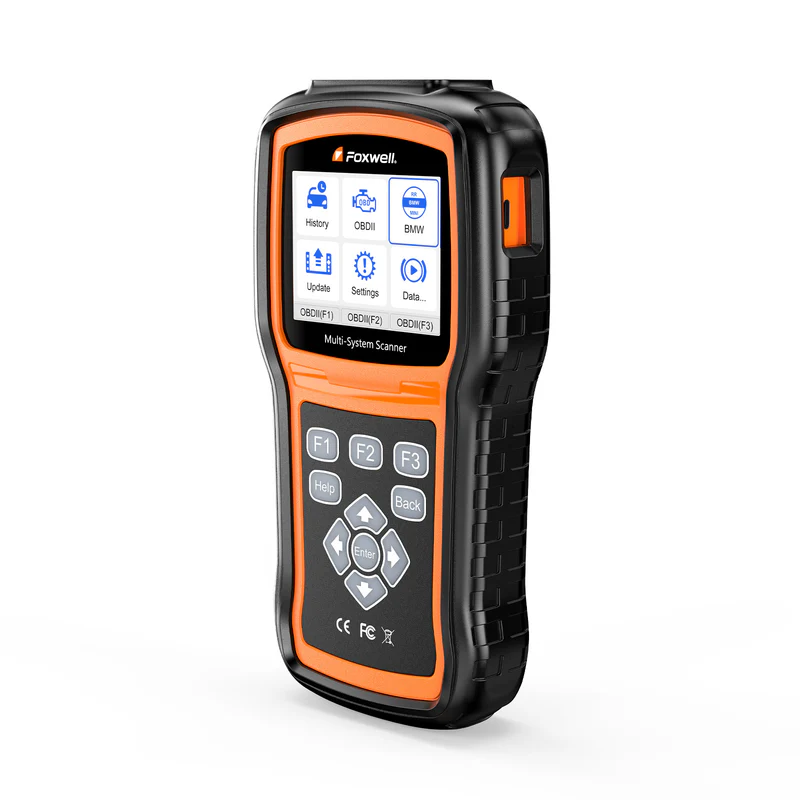
- For regular DIYers and small shops: Invest in a tester & cleaner tool like the Foxwell JT200 for long-term value and deep cleaning.
- For persistent misfires, hard starting, or mechanical failure: Consider injector replacement only when cleaning doesn’t help.
How Long Does It Take to Clean Fuel Injectors
- Fuel additive (in-tank cleaner)
2 minutes to pour in — works gradually as you drive (full effect in 1–2 full tanks).
- Professional fuel induction service
Around 25–60 minutes total; done while the injectors stay on the car.
- DIY / shop cleaning with a tester-cleaner machine (like Foxwell JT200)
90 minutes to 3 hours, including removing injectors, cleaning, testing spray pattern, and reinstalling.
- Ultrasonic cleaning (off-car, professional)
1–3 hours per set, plus removal and installation time.
How to Tell If Cleaning Worked
After cleaning, you should notice improvements such as:
- Smoother idle, less shaking or bouncing RPM
- Better fuel economy (MPG goes back up)
- Quicker, easier starts — no more long cranking
- Stronger acceleration, no hesitation or sputtering
- Fewer misfires or no misfires at all
- Check Engine Light stays off (if it was on before)
- No more strong gas smell from the engine bay
- More consistent power from all cylinders
However, the most accurate and reliable way to confirm success is by inspecting injector performance directly.
A clean, consistent spray pattern and balanced fuel flow across all injectors are the definitive signs that cleaning was fully effective.
Beyond the Surface: What if Cleaning Fails?
Sometimes, even the most thorough cleaning won't solve the problem.
This is because clogging is only one type of injector failure. If your engine still misfires after a professional service, you aren't dealing with dirt—you’re dealing with mechanical or electrical failure:
- Weak Internal Springs: The injector can't snap shut fast enough, leading to "dripping."
- Solenoid Failure: The electrical coil inside is burnt out; no amount of chemical will fix this.
- Physical Nozzle Damage: High-pressure wear has permanently deformed the spray hole.
How to stop guessing?
This is where the Foxwell JT Series changes the game.
-
JT200 – suitable for basic injector testing and cleaning needs
- JT400 / JT600 – designed for more advanced or multi-injector workflows
Unlike a simple flush, these systems allow you to perform a Flow Test and Leakage Test.
- Result A: Injector flows perfectly? The problem is elsewhere (spark plugs, coils).
- Result B: Injector spray is lopsided? It's time to replace it.
Compared to repeated professional cleaning services, a one-time investment in a fuel injector cleaner & tester can often pay for itself after just a few uses — especially for DIY users or small workshops.
Related Reading: Foxwell JT600 Review
Prevent Dirty Fuel Injectors in the Future
Preventive maintenance can significantly extend injector life.
Here are a few best practices:
- Use high-quality fuel from reliable stations
- Add fuel system cleaner periodically
- Replace the fuel filter as recommended
- Avoid letting fuel sit for long periods
- Perform regular injector checks if symptoms appear
Keeping injectors clean is not just about maintenance — it’s about maintaining engine efficiency and avoiding larger repairs later.
Related reading: Foxwell Fuel Injector Cleaner Machine JT200 FAQs
FAQ
How do I tell if my fuel injector is dirty or something else?
Focus on these key signs: rough idle, poor MPG, hesitation on acceleration, misfires, and hard starting.
If these symptoms improve after a fuel induction service or cleaning, the issue was almost certainly dirty injectors.
For certainty, test spray pattern and fuel flow — this confirms injector performance beyond guesswork.
Can dirty fuel injectors trigger the check engine light?
Sometimes. Severe cases may trigger codes like:
- P0300 (random misfire)
- P0171 (lean condition)
However, mild injector issues may not trigger any code at all.
Can dirty fuel injectors cause bad gas mileage?
Yes. When injectors are dirty, they may not deliver fuel evenly, leading to incomplete combustion. This forces the engine to use more fuel to maintain performance, reducing overall fuel efficiency.
Can I clean fuel injectors at home without removing them?
Yes, but only for light deposits. Fuel additives can help clean injectors without removal, but they are less effective for heavy carbon buildup. For deeper cleaning, removing the injectors and using a dedicated cleaning machine is recommended.
What’s the difference between dirty and clogged fuel injectors?
- Dirty: Light to medium carbon buildup; symptoms are mild that affect spray quality (rough idle, lower MPG).
- Clogged: Severe blockage; fuel flow is restricted or fully blocked, causing misfires, no-start, or major performance loss.Clogged injectors often require more aggressive cleaning or replacement.
Does cleaning fuel injectors fix the problem completely?
It depends on the root cause.
- Cleaning will fully resolve issues caused by carbon buildup, clogs, or restricted fuel flow—restoring spray pattern, idle quality, and fuel economy.
- However, if the injector has internal wear, physical damage, or electrical failure, cleaning alone will not fix the problem, and replacement will be necessary.
- For full confidence, always test injector performance after cleaning to confirm it is functioning properly and avoid wasting time on a faulty injector.
Can dirty fuel injectors cause a misfire?
Yes. Uneven or restricted fuel delivery can lead to incomplete combustion in one or more cylinders, causing misfires.
Can dirty fuel injectors cause rough idle?
Yes. Rough idle is one of the most classic symptoms of dirty injectors. When injectors don’t deliver fuel evenly, the engine struggles to maintain a stable idle speed.
Should you add injector cleaner to a full tank or half tank?
Most manufacturers recommend adding cleaner to a nearly empty tank, then filling it up.
- ✔ This helps the cleaner mix evenly
- ✔ Ensures proper concentration
- ✔ Maximizes cleaning effectiveness
Adding it to a completely full tank without following instructions may dilute the cleaner too much.


Leave a comment
This site is protected by hCaptcha and the hCaptcha Privacy Policy and Terms of Service apply.