

Key Takeaways
- The purge valve (canister purge solenoid) controls fuel vapor flow from the EVAP charcoal canister to the engine intake manifold.
- A failed purge valve triggers codes P0441, P0443, P0455, P0456, or P0496 and illuminates the Check Engine Light.
- Common symptoms include rough idle, poor fuel economy, hard starts, and failed emissions tests.
- Testing takes under 15 minutes with a multimeter or vacuum hand pump — no dealer required.
- Replacement parts cost $43–$65; labor adds $150–$320 at a shop. Most DIYers complete the job in 20–30 minutes.
- A stuck-open purge valve causes a rich fuel mixture and stalling; a stuck-closed valve causes lean conditions and failed EVAP monitors.
What Is a Purge Valve?
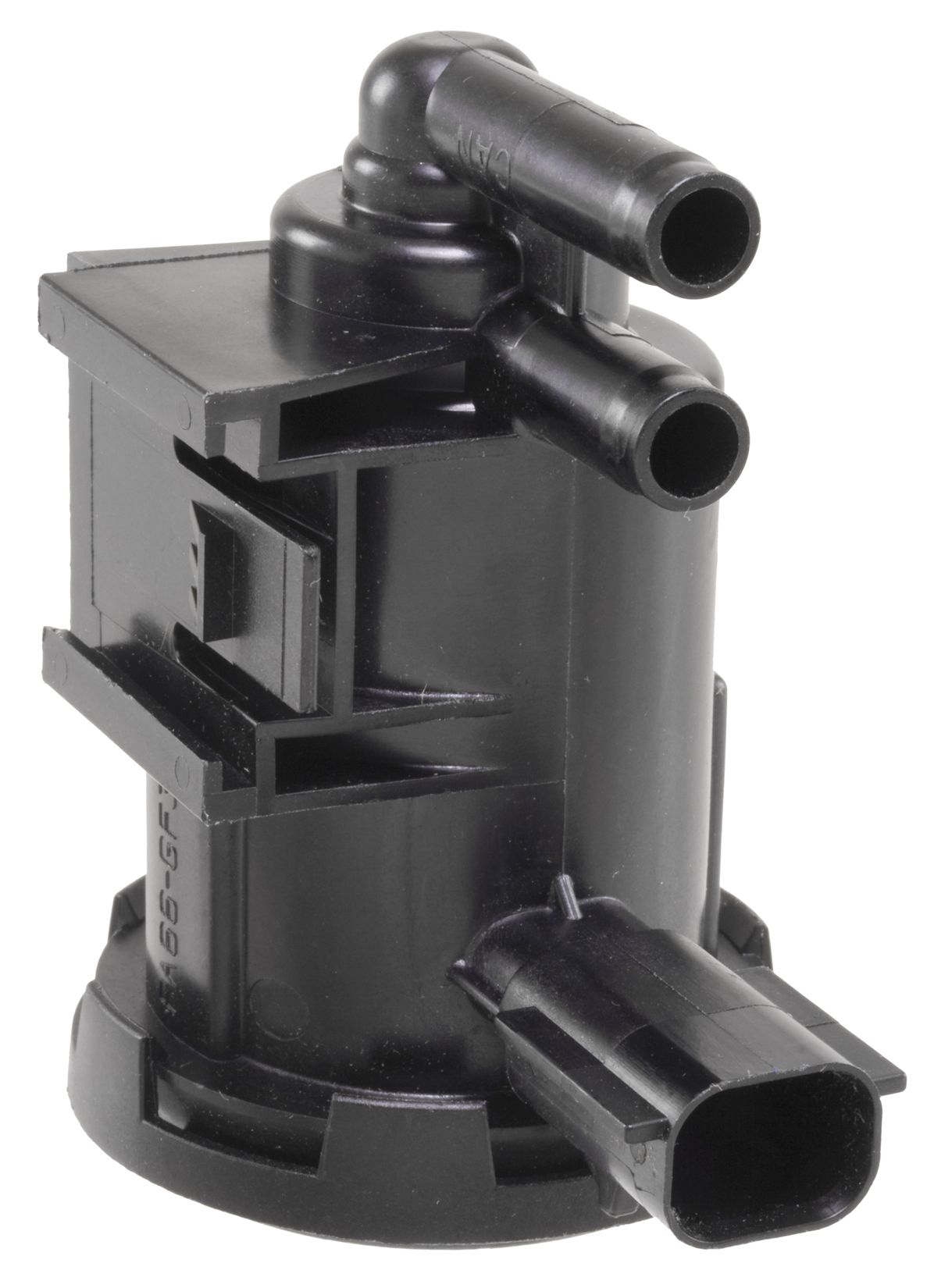
The purge valve — officially called the Evaporative Emission Control (EVAP) canister purge solenoid valve — is a small, electrically operated valve that sits between your vehicle's charcoal (activated carbon) canister and the engine's intake manifold. It is a core component of the EVAP system, which every gasoline-powered passenger car sold in the United States has been required to carry since the early 1970s.
The valve itself is inexpensive and unassuming — typically a plastic body roughly the size of a golf ball, with two vacuum ports and a two-pin electrical connector. The PCM (Powertrain Control Module) cycles it open and closed using a pulse-width modulated (PWM) signal, giving precise control over vapor flow.
📌 Technical Term: Canister Purge Solenoid (CPS)
In OEM service literature and scan tool PIDs, you will see this component referred to as the Canister Purge Solenoid, EVAP Purge Control Valve, or simply EVAP Purge Valve. All terms refer to the same part.
What Does a Purge Valve Do?
Gasoline is volatile. Even inside a sealed fuel tank, hydrocarbons evaporate continuously and would escape into the atmosphere — causing smog and wasting fuel — if not captured. The charcoal canister absorbs those vapors and stores them. The purge valve's job is to release those stored vapors into the engine at the right time so they are burned as part of the normal combustion process rather than vented to the atmosphere.
Here is how the purge cycle works step by step:
1.Engine reaches operating temperature
The PCM waits until coolant temperature and engine load reach thresholds to avoid running rich during cold start.
2.PCM opens the purge valve
A PWM signal energizes the solenoid, allowing manifold vacuum to draw vapors from the charcoal canister through the purge valve.
3.Oxygen sensor feedback
The PCM monitors upstream (pre-cat) O2 sensor voltage. If the mixture goes rich, it reduces purge duty cycle. This is called closed-loop fuel trim correction.
4.EVAP monitor completes
Common Symptoms of a Bad Purge Valve
Because the purge valve affects both fuel delivery and EVAP system integrity, its failure creates a distinctive cluster of drivability and diagnostic symptoms. The specific symptoms depend on how the valve fails — stuck open, stuck closed, or electrically open-circuit.
| Symptom | Likely Failure Mode | Severity |
|---|---|---|
| Check Engine Light (CEL) illuminated | Any purge valve failure mode | 🟡 Moderate |
| Rough or erratic idle (especially when engine is warm) | Stuck open — excessive fuel vapor enters intake manifold | 🟡 Moderate |
| Engine stalls at idle or low speed | Stuck open — severe vapor enrichment causes unstable combustion | 🔴 High |
| Hard starting or extended cranking after refueling | Stuck open — fuel vapors flood the intake manifold after shutdown | 🟡 Moderate |
| Poor fuel economy | Stuck open — PCM compensates with positive fuel trims | 🟡 Moderate |
| Fuel smell inside or around the vehicle | Stuck open — unburned fuel vapors escape the EVAP system | 🟡 Moderate |
| EVAP monitor remains "Not Ready" after drive cycle | Stuck closed or electrical failure prevents purge operation | 🟡 Moderate |
| Failed emissions (smog) inspection | Any failure mode preventing EVAP monitor completion | 🔴 High |
| Hesitation during acceleration | Stuck open — temporary air-fuel imbalance before PCM correction | 🟢 Low |
| Clicking or chattering noise under the hood | Electrical short or intermittent valve operation | 🟢 Low |
🚨 Watch for This Combination
Hard start immediately after a fill-up + rough warm-idle + P0446 or P0496 = almost certainly a stuck-open purge valve. The canister becomes saturated and bleeds raw vapors into the intake manifold even when the engine is off.
Related Diagnostic Trouble Codes (DTCs)
When the PCM detects abnormal behavior in the EVAP purge circuit, it stores one or more OBD-II codes and illuminates the MIL (Malfunction Indicator Lamp). The following codes are directly associated with purge valve function:
P0441:EVAP System Incorrect Purge Flow
The PCM commanded a purge but measured flow does not match the expected value. Often a stuck-closed valve or kinked hose. Causes EVAP monitor failure.
P0443:Purge Control Valve Circuit Malfunction
Electrical fault in the purge solenoid circuit — open, short to ground, or short to voltage. Check wiring and connector before condemning the valve.
P0455:EVAP System Large Leak Detected
A large leak (≥0.080 in / 2.0 mm equivalent orifice) in the EVAP system. May not be the purge valve itself — inspect hoses, gas cap, and canister too.
P0456:EVAP System Very Small Leak Detected
Small leak (≥0.020 in / 0.5 mm). High search volume (24K/mo) — one of the most common EVAP codes. Purge valve seat wear is a frequent cause.
P0496:EVAP Flow During Non-Purge Condition
Most directly implicates a stuck-open purge valve. The PCM detects vapor flow when the valve should be closed. Rich fuel trims and hard post-fill starts are hallmarks of this code.
| Code | Monitor Type | Drive Cycle to Set | Key Symptom Trigger | Freeze Frame PID to Check |
|---|---|---|---|---|
|
P0441 |
EVAP Purge Flow | Warm idle ≥2 min | No flow response during commanded purge | EVAP Purge Duty Cycle % |
|
P0443 |
EVAP Circuit | Key on, engine off | Solenoid resistance out of range | Purge Solenoid Commanded State |
| EVAP Leak | Cold start, idle 10 min | Rapid pressure loss during sealed test | EVAP System Pressure (kPa) | |
| EVAP Leak | Cold start, idle 10 min | Slow pressure loss during sealed test | EVAP System Pressure (kPa) | |
|
P0496 |
EVAP Purge Flow | Cold start / decel | Flow detected when valve commanded closed | STFT Bank 1, LTFT Bank 1 |
How to Diagnose a Bad Purge Valve
A proper diagnosis moves through three layers: code retrieval → live data analysis → component testing. Replacing the valve without confirming the root cause leads to unnecessary parts spend and possible comebacks.
Step 1 — Retrieve Codes and Freeze Frame Data
Connect an OBD-II scan tool and record all stored and pending codes. Pull the freeze frame snapshot associated with the fault — note engine coolant temperature (ECT), RPM, MAP/MAF, and short-term / long-term fuel trims (STFT / LTFT).
📊 Interpreting Fuel Trim Live Data
Normal LTFT: −5% to +5%. LTFT of +10% or higher at idle with a P0496 strongly indicates a stuck-open valve flooding the manifold with vapors (PCM adding fuel to compensate for perceived lean condition is inverted when purge flow is uncontrolled). LTFT improving at higher RPM is a classic stuck-open purge valve pattern.
Step 2 — Visual Inspection
Locate the purge valve (typically on or near the intake manifold or throttle body, connected by vacuum hoses to the EVAP canister). Inspect for:
- Cracked, collapsed, or disconnected vacuum hoses
- Corroded or backed-out electrical connector pins
- Physical cracks in the valve body
- Fuel staining or carbon deposits on hose ends
Step 3 — Component-Level Testing
See How to Test a Canister Purge Valve for the complete multimeter and vacuum pump procedure.
Step 4 — Confirm with Bidirectional Control (Advanced)
If your scan tool supports bidirectional output testing, command the purge valve open and closed while monitoring STFT. A functioning valve will cause STFT to swing rich (positive) as it opens. No fuel trim response = failed valve or disconnected hose. Immediate rough idle = valve function confirmed, but may indicate a saturated canister.Using the Foxwell NT530 Plus or NT809 enables users to read live data streams, monitor I/M readiness, and perform active bidirectional commands for more precise diagnostics.
What Happens When It Works Correctly vs. Incorrectly
| Condition | Valve State | Engine Behavior | Fuel Trim (LTFT) | EVAP Monitor |
|---|---|---|---|---|
| ✅ Normal Operation | Cycles open/closed per PCM command (PWM 0–100%) | Smooth idle; normal acceleration; meets emissions | ±5% (closed loop corrects minor variations) | Completes and sets "Ready" |
| ❌ Stuck Open | Valve mechanically open — no solenoid control | Rough/loping idle, stalling, hard start after fill-up, fuel smell | LTFT +10% to +25% at idle (lean correction for flood) | Fails — excessive flow detected during non-purge |
| ❌ Stuck Closed | Valve mechanically or electrically closed | Subtle — may drive normally; reduced fuel economy | Normal to slightly negative (−5% to −10%) | Fails — no flow detected during commanded purge |
| ❌ Electrical Failure | Open or short circuit in solenoid winding | Depends on fail-safe position (usually closed) | Minimal change | Fails immediately — P0443 set |
How to Test a Canister Purge Valve
You can test the purge valve accurately with three tools: a digital multimeter (DMM), a vacuum hand pump, and optionally a 12V test light or jumper wire. No dealer equipment required.
Test 1 — Resistance (Solenoid Coil Integrity)
Disconnect the electrical connector
from the purge valve. Set your DMM to resistance (Ω) mode.
Probe both terminals
of the valve connector (not the harness side). Read resistance.
Compare to specification:
Most purge valves read 22–32 Ωat 68°F (20°C). Check your vehicle's FSM for the exact value.
| Reading | Interpretation | Action |
|---|---|---|
| 22–32 Ω | ✅ Solenoid coil is good | Proceed to vacuum test |
| OL (open loop / infinite) | ❌ Open circuit — coil burned out | Replace valve |
| <5 Ω | ❌ Short circuit — coil shorted | Replace valve |
Test 2 — Vacuum Leak Test (Mechanical Integrity)
1.With the valve disconnected electrically
attach your vacuum hand pump to one port and plug the other port.
2.Apply 15–18 in Hg vacuum.
The valve should hold vacuum when deenergized (default closed)
3.Apply 12V to the solenoid terminals
Using a jumper wire. You should hear a click and vacuum shouldimmediately drop to zero(valve opens).
4.Remove power
Vacuum should rebuild immediately if you re-apply pump — confirming the valve returns to closed position.
✅ Pass Criteria SummaryDe-energized: holds vacuum (no leak). Energized: releases vacuum instantly (opens fully). Solenoid resistance: within specification. All three pass = valve is good; focus diagnosis on hoses, canister, or PCM output circuit.
Test 3 — Live Data Analysis with Scan Tool
Monitor these PIDs simultaneously during a warm idle test cycle:
-
EVAP Purge Duty Cycle (%)— should ramp from 0% to 50–80% as engine warms -
STFT Bank 1— should swing ±5% as purge cycles on/off -
EVAP System Pressure / Vacuum (kPa or in H₂O)— should change during sealed leak test -
O2 Sensor B1S1 Voltage— should oscillate 0.1–0.9 V in closed loop
Purge Valve vs. Vent Valve
These two valves are the most commonly confused components in the EVAP system. They work as a matched pair, but perform opposite functions.
| Feature | Purge Valve (Canister Purge Solenoid) | Vent Valve (Canister Close Valve) |
|---|---|---|
|
Location |
Between charcoal canister and intake manifold; near engine | On or adjacent to charcoal canister; near fuel tank |
|
Default State |
Normally closed (de-energized) | Normally open (de-energized) |
|
Function During Purge |
Opens — allows vacuum to draw vapors from canister | Opens — allows fresh air into canister to push vapors out |
|
Function During Leak Test |
Closes — seals system from engine side | Closes — seals canister from atmosphere |
|
Failure Symptom |
Rough idle, rich fuel trim, stalling, P0441/P0443/P0496 | EVAP monitor failure, P0446, P0447, P0448 |
|
Typical Resistance |
22–32 Ω | 22–32 Ω (similar construction) |
|
Replacement Cost (Part) |
$15–$50 | $20–$60 |
💡 Memory Tip
Purge= pushes vapors into the engine (intake side).
Vent= opens to atmosphere (canister side). If your code is P0441 or P0496, focus on the purge valve. If it is P0446, focus on the vent valve.
Does My Purge Valve Need to Be Changed?
Not every EVAP code means the purge valve itself must be replaced. Use this decision checklist before purchasing a part:
Check the gas cap first.
Inspect all vacuum hoses.
Cracked or collapsed hoses between the canister, purge valve, and intake manifold are the second most common cause of EVAP codes.
Perform the resistance and vacuum tests
Check PCM output circuit
If resistance is correct but the valve does not respond to 12V activation, verify the PCM driver circuit with a test light before condemning the valve.
⚠️ Replace if Any of These Are True: Resistance outside 22–32 Ω range. Vacuum leaks past valve when de-energized · Valve does not open when energized · P0496 confirmed with normal fuel trims at highway speed · Valve body is cracked or hoses are carbon-fouled at the valve ports.
Canister Purge Valve Replacement Cost
| Cost Category | DIY | Independent Shop | Dealership |
|---|---|---|---|
| Part (OEM Equivalent) | $43–$175 | $50–$175 | $80–$175 |
| Labor | $0 (0.3–0.5 hr job) | $70–$150 | $120–$200 |
| Diagnostic Fee | $0 (own scanner) | $60–$120 (often waived with repair) | $150–$200 |
| Total Estimate | $43–$175 | $150–$320 | $300–$500 |
The purge valve is one of the most cost-effective repairs on a modern vehicle. On most cars, the valve is accessible in under 10 minutes — disconnect the electrical connector, release the two hose clips, swap the part, reconnect, clear the code, and verify with a drive cycle. No special tools required.
Vehicle-specific examples from RepairPal (2026):
- Generic/average across all vehicles: $201–$240
- Ford Escape (specific model): $258–$303
- Non-luxury brands (Chevrolet, Toyota, Ford) per AutoTechIQ: $170–$200
- Mercedes G63 AMG per AutoTechIQ: approximately $230–$250
- Luxury vehicles / European imports / turbocharged engines: can exceed $500
💰 Parts Buying Tips
OEM parts from the vehicle manufacturer offer the best fit and longevity. Aftermarket options from Dorman, ACDelco, or Bosch are reputable alternatives at 40–60% less cost. Avoid unbranded generic parts — inconsistent valve seat sealing leads to rapid re-failure and repeat EVAP codes.
How to Clean a Purge Solenoid Valve
Cleaning is appropriate only when the valve shows sluggish response due to carbon fouling, not when it has failed the resistance or vacuum tests. If it has failed electrically or mechanically, cleaning will not restore function — replace it.
- Remove the valve from the vehicle and disconnect both hoses and the electrical connector.
- Spray carburetor cleaner or MAF sensor cleaner into both ports. Allow to soak for 5 minutes to dissolve carbon deposits.
- Apply 12V briefly to cycle the valve open and closed several times while the cleaner is inside — this dislodges deposits from the valve seat.
- Blow compressed air through both ports to flush residue out.
- Re-test with vacuum pump before reinstalling. If the valve still leaks when de-energized or fails to open fully when energized, replace it.
- 🚫Do Not Use These Cleaners on Purge Valves Brake cleaner, WD-40, or penetrating oils can damage solenoid seals and winding insulation. Use only carburetor cleaner or dedicated electrical contact cleaner on the exterior of the solenoid body.
Can a Bad Purge Valve Cause an Emissions Test Failure?
Yes — and it is one of the most common causes of emissions test rejection, for two distinct reasons:
Reason 1: Active Check Engine Light (MIL)
Every U.S. state that conducts OBD-II-based emissions testing (the vast majority) will automatically fail any vehicle with an illuminated MIL, regardless of what the code is. A P0441, P0443, or P0496 from a bad purge valve will cause immediate failure before the inspector even checks tailpipe emissions.
Reason 2: EVAP Monitor "Not Ready"
Even if you clear the code immediately before the test (not recommended, and often caught by inspectors checking pending codes), the EVAP readiness monitor may show Not Ready. Most states allow one or two monitors in a "not ready" state for older vehicles, but the EVAP monitor is specifically scrutinized. A stuck-closed or electrically dead purge valve prevents the EVAP monitor from ever completing its self-test, leaving it permanently "not ready."
| Failure Scenario | Test Result | Fix Required |
|---|---|---|
| MIL on with P0441/P0443/P0496 | ❌ Automatic fail (MIL illuminated) | Replace valve, clear code, complete drive cycle |
| EVAP monitor "Not Ready" | ❌ Fail (most states, model year ≥1996) | Repair root cause, complete OBD-II drive cycle |
| Code recently cleared (pending) | ❌ Fail (inspector checks pending codes) | Proper repair — not code clearing |
| Valve replaced, monitor completed | ✅ Pass (assuming no other faults) | N/A |
Conclusion
The canister purge valve is a small, inexpensive part that plays a disproportionately large role in your vehicle's emissions compliance, fuel efficiency, and drivability. When it fails — whether stuck open, stuck closed, or electrically faulted — the symptoms range from a barely noticeable reduction in MPG to a stalling engine and immediate emissions test failure.
The good news: diagnosis is straightforward. A multimeter, a vacuum hand pump, and an OBD-II scan tool like the Foxwell NT809 or NT809BT are sufficient to definitively confirm or rule out the purge valve as the root cause. The repair itself is among the most DIY-friendly jobs on a modern vehicle — most purge valves can be replaced in under 30 minutes for $15–$50 in parts.
If your Check Engine Light is on with any P04xx EVAP code and you notice rough idle or hard starts after refueling, start here. You will very likely resolve the problem without a dealer visit.
Frequently Asked Questions
1. What happens when a purge valve goes bad?
A failed purge valve disrupts fuel vapor management. Depending on whether it fails open or closed, you may experience rough idle, engine stalling, hard starts after refueling, reduced fuel economy, fuel smell in the cabin, and an illuminated Check Engine Light with EVAP-related codes (P0441, P0443, P0455, P0456, or P0496). In severe cases (stuck open), the engine floods with raw hydrocarbon vapor, causing stalling at idle or a dangerously rich fuel mixture.
2. How do I know if I need a purge valve?
The clearest indicators are: (1) a Check Engine Light with a P044x or P0496 code, (2) rough warm idle that improves at higher RPM, (3) hard starting immediately after filling the tank, and (4) positive long-term fuel trims (LTFT > +10%) at idle that normalize at highway speeds. Confirm with the resistance test (22–32 Ω) and vacuum test described in this article before purchasing a replacement part.
3. Can I still drive with a bad purge valve?
In most cases, yes — a bad purge valve is not an immediate safety emergency. However, a stuck-open valve can cause stalling at idle or intersections, which creates a safety risk. Additionally, you will fail an emissions test with an active MIL or incomplete EVAP monitor. The repair is inexpensive enough that there is little reason to delay it beyond a few weeks.
4. What happens if the purge valve is stuck closed?
A stuck-closed purge valve prevents the PCM from purging stored fuel vapors into the engine. The charcoal canister eventually becomes saturated, potentially allowing vapors to escape to the atmosphere. Drivability symptoms are usually mild — slightly reduced fuel economy and possible fuel smell — but the EVAP readiness monitor will not complete, meaning you cannot pass an emissions inspection. The stored code is typically P0441 (Incorrect Purge Flow).
5. How long can you drive with a bad purge valve?
There is no hard mileage limit, but the risks increase over time. A stuck-open valve gradually saturates the charcoal canister, worsening idle quality and fuel economy. A stuck-closed valve eventually causes canister overflow. Most mechanics recommend addressing EVAP codes within 2–4 weeks. Given the low cost of repair, prompt attention is worthwhile.
6. Is it safe to drive with a bad purge valve?
Generally yes, with one important exception: if the valve is stuck open and causing stalling at idle or low-speed driving (such as in stop-and-go traffic or at intersections), the vehicle should be repaired before regular driving. In all other failure modes, the car remains drivable but will not pass emissions testing and will run sub-optimally.


Leave a comment
This site is protected by hCaptcha and the hCaptcha Privacy Policy and Terms of Service apply.