


P0507 means "Idle Control System RPM Higher Than Expected": the engine is idling faster than the speed commanded by the ECM/PCM. It indicates that the computer cannot bring idle speed down to the expected level.
P0507 is a generic OBD-II code that can appear on many vehicles, including Chevy, Jeep, Honda, Mazda, Hyundai, Audi, Nissan and VW. The exact RPM threshold varies by manufacturer.
What Does P0507 Code Mean?
The P0507 trouble code indicates that actual engine idle speed is higher than the target set by the engine control module. The problem may involve excess intake air, throttle body operation or incorrect learned idle settings.
| Item | P0507 Details |
|---|---|
| Definition | Idle Control System RPM Higher Than Expected |
| Severity | Low to moderate, depending on symptoms |
| Main symptom | Higher-than-normal idle RPM |
| Common causes | Vacuum leaks, throttle body problems, idle relearn issues |
| Can you drive? | Usually short distances if the vehicle remains controllable |
| Typical fix | Repair intake leaks, service the throttle body or perform an idle relearn |
Related codes include P0505 (idle control malfunction), P0506 (idle RPM lower than expected), P0508/P0509 (idle air control circuit faults) and P2279 (intake air system leak).
Symptoms of the P0507 Code
The most common symptom of P0507 is an unusually high idle speed, often accompanied by the check engine light. Other symptoms may include:
- Idle speed around 1,000–2,000 RPM or higher when warm
- Rough, unstable or fluctuating idle
- Harsh engagement when shifting into Drive or Reverse
- Increased fuel consumption
- Idle that remains high after the engine warms up
A temporarily higher idle during a cold start or when the A/C is operating may be normal. Compare the actual idle speed with your vehicle's specifications.
What Causes the P0507 Code?
P0507 usually occurs when excess air enters the engine or the idle-control system cannot reduce airflow as expected. Common causes include:
- Vacuum or intake leaks: Damaged hoses, intake manifold gaskets, intake boots or brake booster hoses.
- Dirty or sticking throttle body: Carbon buildup can interfere with throttle operation. Learn how to identify a dirty or failing throttle body before replacing it.
- Idle air control (IAC) valve problems: On vehicles equipped with a separate IAC valve, sticking or malfunctioning components can affect idle airflow.
- PCV or EVAP purge valve problems: Failed valves or hoses may allow unwanted airflow.
- Missing idle relearn: Throttle cleaning, replacement or battery disconnection may change learned idle values.
- Throttle or sensor problems: Mechanical binding, incorrect sensor readings or electrical faults can interfere with idle control.
Why Does P0507 Appear After Throttle Body Cleaning or Battery Disconnect?
P0507 can appear after throttle body cleaning, replacement or battery disconnection because the ECM/PCM may need to relearn the correct idle position.
Over time, the engine computer learns throttle settings that compensate for carbon buildup and normal wear. Cleaning the throttle body changes airflow, and the previously learned position may no longer produce the expected idle speed.
First, check that all intake hoses and electrical connectors were reinstalled correctly. If no problems are found, follow the manufacturer's throttle or idle relearn procedure.
Some vehicles relearn automatically, while others require a compatible diagnostic scanner. Learn more about resetting a throttle body with an OBD2 scanner.
Can I Still Drive with a P0507 Code?
You can often drive a short distance with P0507 if the idle is only moderately high and the vehicle remains controllable. However, continued driving without diagnosis is not recommended.
High idle speed can increase fuel consumption and cause harsh gear engagement. If the problem involves an intake leak, additional lean-condition codes may also appear.
If RPM is excessively high, the vehicle surges unexpectedly, shifting becomes difficult or the engine shows signs of overheating, stop driving and arrange a professional inspection.
How to Diagnose and Fix P0507
To fix P0507, identify the cause of the high idle before replacing any parts. Start by considering when the problem appeared.
| Situation | What to Check First |
|---|---|
| After throttle body cleaning | Intake connections and idle/throttle relearn |
| After battery disconnection | Manufacturer-specific idle relearn |
| No recent maintenance | Vacuum and intake leaks |
| Hissing noise at idle | Vacuum hoses, PCV system and intake gaskets |
| P0507 with P0171/P0174 | Unmetered air and fuel trim readings |
| Idle increases when warm | PCV, intake leaks and throttle operation |
Step 1: Scan for Trouble Codes
Use an OBD2 scanner to read all stored and pending codes. Record freeze-frame data and check for related intake, throttle or fuel-system faults.
Step 2: Check Live Idle Data
Warm up the engine and compare actual RPM with commanded idle RPM, if available. Check throttle position, fuel trims and IAC data on vehicles that support these parameters.
Step 3: Inspect for Vacuum Leaks
Check vacuum hoses, intake boots, PCV connections, the brake booster hose and intake manifold gaskets. A professional smoke test can locate leaks that are difficult to see. If you notice hissing or unstable idle, review the common symptoms of a vacuum leak.
Step 4: Inspect the Throttle Body or IAC Valve
Look for carbon buildup, sticking or damaged components. Clean the throttle body or IAC valve when appropriate, following the vehicle manufacturer's instructions.
Step 5: Perform an Idle or Throttle Relearn
If the issue began after throttle body service or battery disconnection, follow the correct idle relearn procedure. Some vehicles require a scan tool to reset learned throttle values. Learn when a scanner can perform a throttle body relearn procedure.
Step 6: Clear the Code and Verify the Repair
After completing the necessary repairs, clear P0507 and monitor idle speed at operating temperature. Take a test drive if the vehicle is safe to operate, then rescan for returning codes.
What If P0507 Appears with Other Codes?
Additional trouble codes can provide useful clues about the cause of P0507.
- P0171/P0174: A lean air-fuel mixture may indicate an intake or vacuum leak.
- P2279: Indicates an intake air system leak and may occur alongside P0507.
- P0505: Points to an idle control system malfunction.
- P0506: Indicates idle RPM lower than expected rather than higher.
If P0507 appears alongside a lean-condition code, see our guide to the P0171 system too lean code for additional diagnostic steps.
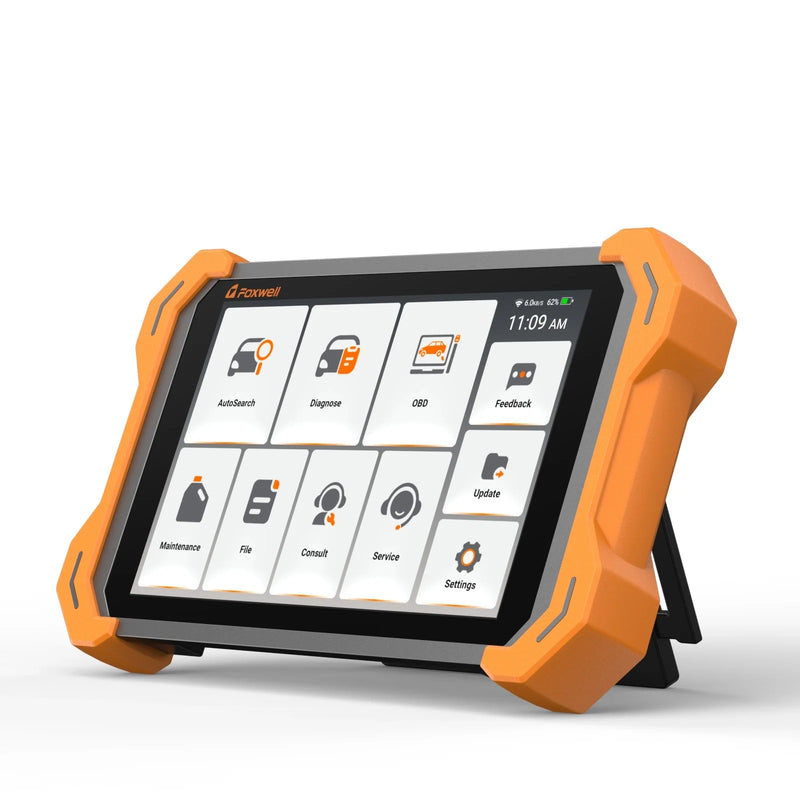
Foxwell Tools for P0507 Diagnosis
A suitable diagnostic scanner can help you read P0507, monitor engine data and check related faults. On supported vehicles, advanced service functions may also allow throttle adaptation or idle relearn procedures.
| Foxwell Tool | Best For | Relevant Features |
|---|---|---|
| NT510 Elite | Brand-focused DIY diagnostics | Full-system diagnostics, bi-directional control and 20+ special functions |
| NT809 BT | Multi-brand diagnostics | Wireless diagnostics, live data, bi-directional control and 30+ service functions |
| GT60 | Mid-range multi-brand diagnostics | Full-system diagnostics, bi-directional control and 20+ maintenance functions |
Note: Reading P0507 does not guarantee that a scanner supports throttle or idle relearn for your vehicle. Function availability depends on the exact make, model, year and engine. Confirm compatibility before purchasing.
P0507 Code by Car Model
Although P0507 has the same general meaning across OBD-II vehicles, the likely causes and relearn procedures can differ by manufacturer.
P0507 Nissan & Infiniti
On Nissan and Infiniti vehicles, P0507 may appear after throttle body cleaning, replacement or battery disconnection. Check for intake leaks before attempting Accelerator Pedal Released Position Learning, Throttle Valve Closed Position Learning or Idle Air Volume Learning, as required by the vehicle.
Nissan technical bulletin NTB05-067 describes high idle and P0507 after throttle body service on certain older models. Follow the procedure applicable to your exact vehicle. Advanced service steps should be handled by a qualified technician.
P0507 Honda
Honda Civic, Accord and other Honda/Acura vehicles may develop P0507 after throttle body cleaning or replacement. Check the PCV system, EVAP purge valve, intake gaskets and vacuum hoses.
On affected Honda/Acura vehicles, the repair procedure may require clearing the learned throttle position using a compatible scan tool before performing idle learn.
P0507 Chevy
For Chevy Silverado, Tahoe, Cruze, Malibu and Equinox vehicles, inspect the intake system, vacuum hoses, brake booster connections and PCV components.
Many Chevy vehicles use electronic throttle control rather than a separate IAC valve. If P0507 appears after throttle service, check for air leaks and follow the applicable idle learn procedure.
P0507 VW & Audi
On some VW and Audi TSI/TFSI engines, a faulty PCV valve or crankcase breather system can introduce unwanted air and contribute to high idle.
Inspect the breather system and intake connections. Throttle body adaptation may be required after certain repairs, depending on the model.
P0507 Hyundai & Kia
For Hyundai Tucson, Kia K5 and other Hyundai/Kia vehicles, begin with vacuum leaks, PCV operation, throttle body condition and actual versus commanded idle RPM.
If the high idle continues after mechanical checks and the correct relearn procedure, a technician can check whether any applicable ECM software updates or manufacturer service bulletins exist.
P0507 vs. P0506: What's the Difference?
| Code | Meaning | Idle Condition |
|---|---|---|
| P0507 | Idle RPM Higher Than Expected | Engine idle is too high |
| P0506 | Idle RPM Lower Than Expected | Engine idle is too low |
Both codes relate to idle speed control, but they indicate opposite problems. P0507 means actual idle speed is higher than commanded, while P0506 means it is lower.
How Much Does It Cost to Fix P0507?
P0507 repair costs can range from under $100 to over $1,000, depending on the cause. These approximate U.S. repair estimates vary by vehicle, labor rates and location.
| Repair | Estimated Cost |
|---|---|
| Throttle body cleaning | $75–$235 |
| PCV valve or hose repair | $50–$250 |
| IAC valve replacement | $150–$500 |
| Throttle body replacement | $300–$1,000+ |
If P0507 started immediately after throttle body cleaning, a relearn may resolve the problem without replacing parts. Diagnose the cause first to avoid unnecessary repairs.
FAQs
How Can You Tell If Your Idle Is Too High?
Warm up the engine, turn off the A/C and defroster, and compare idle RPM with the manufacturer's specification. Many gasoline vehicles idle below 1,000 RPM when warm, but the normal range varies. A scan tool can help compare actual and commanded idle speed.
What Does a Higher Idle Speed Indicate?
A consistently high idle may indicate a vacuum leak, dirty or sticking throttle body, faulty IAC valve, PCV problem or incorrect learned idle values. Temporary increases during cold starts or accessory operation can be normal.
Will Cleaning the Throttle Body Fix P0507?
Sometimes. Cleaning can help when deposits interfere with throttle operation. However, cleaning may also change airflow enough to require an idle relearn. It will not repair a vacuum leak or failed PCV component.
Why Did P0507 Appear After Cleaning the Throttle Body?
Cleaning removes carbon buildup and can change airflow through the throttle opening. If the ECM/PCM continues using previously learned throttle values, the idle may become too high. Check intake connections and perform the specified relearn procedure.
Will Disconnecting the Battery Fix P0507?
Not necessarily. Disconnecting the battery may reset some learned values on certain vehicles, but it will not repair a vacuum leak or mechanical fault. Some vehicles require a specific idle relearn or scan-tool procedure.
Why Does P0507 Keep Coming Back After I Clear It?
If P0507 returns, the underlying problem may still be present or the required relearn may not have been completed. Check intake leaks, PCV and EVAP components, throttle operation and manufacturer-specific relearn requirements before replacing more parts.

Leave a comment
This site is protected by hCaptcha and the hCaptcha Privacy Policy and Terms of Service apply.