

Key Takeaways:
- Same Part, Different Name: Camshaft adjuster solenoid = VVT solenoid (oil control valve) — used interchangeably in Audi, Mercedes, VW, Mitsubishi, etc.
- Role Clarified: It’s the "controller" (regulates oil flow), not the "executor" — camshaft actuator/phaser physically adjusts camshaft timing.
- Common Symptoms: Check Engine Light (P0011/P0012/P0014), cold-start rattle, rough idle, power loss, higher fuel consumption, failed emissions.
- Top Causes (German Cars): Oil contamination/sludge (No.1), coil aging, wiring issues, low oil pressure — rule these out first!
- Fault Code Note: P0011/P0012 don’t always mean a bad solenoid — low/dirty oil often triggers false codes.
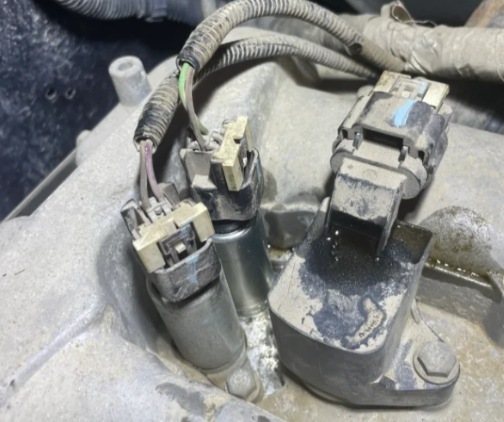
What Is a Camshaft Adjuster Solenoid?

Common Vehicle Applications
- Audi A4 / A6 (2.0T, 3.0T engines)
- Mercedes-Benz C-Class / E-Class
- Volkswagen Passat / Golf / Tiguan / Magotan
What Does a Camshaft Adjuster Solenoid Do?
- Regulating engine oil pressure;
- Directing that pressurized oil to the camshaft actuator (also called a phaser)—the "mechanical muscle" of the VVT system.
- The engine’s ECU (Engine Control Unit) sends a signal to the solenoid;
- The solenoid opens or closes specific oil passages in response;
- Pressurized oil flows to the camshaft actuator;
- The actuator physically advances or retards the camshaft angle, optimizing combustion at every speed.
Why a Faulty Solenoid Impacts Performance
- Fuel Consumption: A failing solenoid disrupts precise timing, leading to incomplete combustion—your engine burns more fuel to maintain power, increasing gas mileage by up to 15-20% in German vehicles.
- Power Loss: Incorrect valve timing reduces air intake and exhaust efficiency, resulting in sluggish acceleration and a noticeable drop in low-end torque (a common complaint in Audi A4 and Mercedes C-Class owners).
- Emissions Issues: Poor combustion increases harmful exhaust gases (HC, CO), often triggering a failed emissions test and illuminating the check engine light.
Common Camshaft Adjuster Solenoid Failure Symptoms
A failing camshaft adjuster solenoid can show up in several ways, especially on German vehicles where VVT control is highly sensitive.
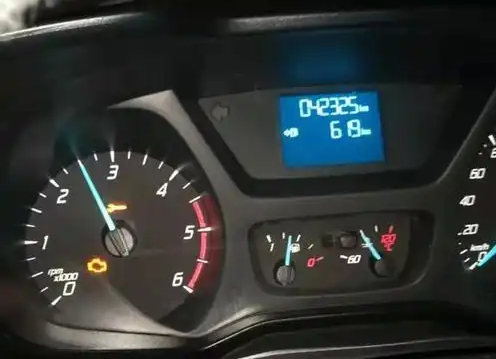
- Check Engine Light (Most Common)
Typical fault codes include:
P0010 / P0013 – Circuit issues (electrical control)
P0011 / P0014 – Timing over-advanced
P0012 – Timing over-retarded
On Audi, Mercedes, and VW, you may also see manufacturer-specific VVT codes that generic scanners fail to interpret correctly.
- Loss of Power & Rough Idle: A hallmark symptom in German cars—you’ll notice hesitation when accelerating, uneven idle (engine "shakes"), or even stalling at stoplights.
-
Increased Fuel Consumption: Inefficient combustion leads to higher gas usage; many VW Magotan owners report a 1-2 MPG drop when the solenoid is failing.
- Unusual Engine Noise: A distinct rattle or ticking sound on cold starts (common in Mercedes and Audi) is caused by delayed oil pressure to the VVT system—this noise fades as the engine warms up but signals imminent solenoid failure.
- Failed Emissions Test: Elevated exhaust emissions are a direct result of poor combustion, a top reason German vehicle owners fail state emissions checks.
- Hard Starting or No-Start (Edge Case): In severe cases (e.g., complete solenoid blockage), the engine may struggle to start or fail to turn over—this is rare but critical to address immediately.
How Do I Know If My Camshaft Adjuster Solenoid Is Bad?
Before rushing to replace a camshaft adjuster solenoid, it’s critical to rule out common "fake" causes. Their VVT systems are extremely sensitive to oil condition and pressure, so many "solenoid failures" are actually just oil-related issues in disguise.
- Step 1: Check Oil Level and Oil Condition (Do This First)
Before touching the solenoid, check the engine oil level and condition.
Low oil, dirty oil, or oil that has broken down can trigger VVT-related fault codes such as P0011 or P0014, even when the solenoid itself is still functioning properly. Because the VVT system relies on precise oil pressure to adjust camshaft timing, any restriction or pressure drop can cause timing errors that look like an electrical or mechanical failure.
⚠️ Important: Many real-world P0011 cases are resolved with an oil change or oil level correction—no parts replacement required.
This is one of the most commonly overlooked steps and a major reason solenoids are replaced unnecessarily.
- Step 2: Read the Fault Codes(Don’t Trust Generic Scanners)
Next, scan the vehicle for diagnostic trouble codes.
- P0010 / P0013: Usually electrical (wiring, connector, or solenoid coil failure).
- P0011 / P0014: Camshaft timing is over-advanced.
- P0012: Camshaft timing is over-retarded.
Important note for German cars: Generic scanners can’t read manufacturer-specific VVT codes (e.g., Audi P001100, Mercedes P001201). Using one often leads to misdiagnosis.
- Step 3: Don’t Rely on VIN-Based Part Lookup Alone
Parts lookup based on VIN can be misleading.
In real-world repairs, the same component may be listed as:
“VVT solenoid” in one catalog
“Camshaft adjuster solenoid” in another
Or grouped under a camshaft actuator system in OEM diagrams
This often leads to confusion, conflicting part numbers, and unnecessary replacement of the wrong component. Always confirm intake vs exhaust position and cross-check the part visually before purchasing.
- Step 4: Perform an Electrical Resistance Test
With the solenoid disconnected, use a multimeter to measure coil resistance.
Most camshaft adjuster solenoids fall within 10–18 ohms (check vehicle-specific specs).
An open circuit, short, or reading far outside spec indicates a failed solenoid.
This quick test helps rule out internal electrical failure without removing major components.
- Step 5: Swap Test (For Engines with 2 Solenoids)
If your engine uses separate intake and exhaust solenoids of the same type, a swap test can be useful.
Swap the intake and exhaust solenoids.
Clear the fault codes.
Drive the vehicle and rescan.
If the fault code moves to the opposite camshaft, the solenoid is confirmed faulty. If it stays in the same position, the issue may lie elsewhere (oil flow, wiring, or the camshaft actuator).
- Step 6: Live Data + Bi-Directional Control (Most Reliable Check)
The most reliable confirmation comes from live data analysis and active testing.
Using a scan tool that supports:
Camshaft timing angle data
VVT duty cycle
Bi-directional solenoid activation
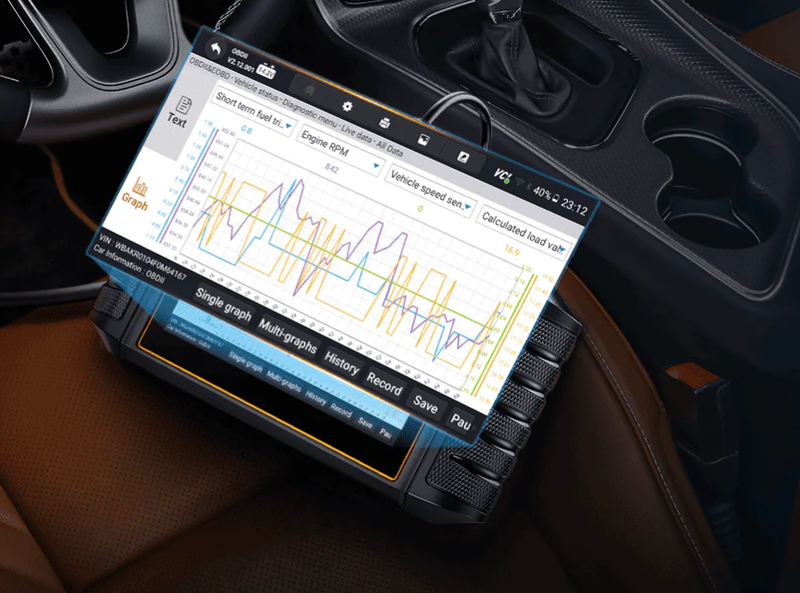
Like Foxwell scanners—optimized for German cars and fully equipped with VVT-specific features. you can observe whether the camshaft responds correctly when the solenoid is commanded on and off. If the ECU commands a timing change and no movement occurs, the solenoid or oil control path is likely at fault.
If timing movement is erratic or mechanically stuck despite a known-good solenoid, the issue may be the camshaft actuator (phaser) instead.
Bottom Line
A camshaft adjuster solenoid should only be replaced after oil condition, electrical integrity, and response behavior are verified. Skipping these checks often leads to unnecessary expense—especially on vehicles where the solenoid is costly.
Also read: Camshaft Sensor Failures: Key Symptoms and Repair Tips
What Causes Camshaft Adjuster Solenoid Failures? (5 Key Causes)
- 🔹 Dirty/Sludgy Oil (Top Culprit)
- 🔹 Internal Solenoid Clogging
- 🔹 Aging Electromagnetic Coil
- 🔹 Wiring/Connector Issues
- 🔹 Low Engine Oil Pressure
How to Test a Camshaft Adjuster Solenoid
Tools You’ll Need
✅ Foxwell GT60: Full-function option – supports OEM VVT codes, real-time VVT data graphing, and bi-directional solenoid activation (required for Test 3)
✅ Foxwell NT624 Elite: Cost-effective option – supports OEM VVT codes and live VVT data (for Test 1/2, no bi-directional control)
- - Digital multimeter
- - Basic hand tools (socket set, pliers)
Test 1: Read Fault Codes with Foxwell
1. Connect the Foxwell scanner to your vehicle’s OBD-II port (under the dashboard).
2. Select your vehicle make/model (e.g., Audi A4 2018) and navigate to the "Engine" system.
3. Run a fault code scan—Foxwell displays brand-specific VVT codes (e.g., Audi P001100, Mercedes P001201) instead of generic codes, pinpointing the solenoid as the issue.
Test 2: Analyze Real-Time Data with scanner
1. In the scanner, go to "Live Data" and select "VVT System" parameters.
2. Monitor the camshaft timing angle (displayed as a real-time graph—easier to interpret than raw numbers).
3. A healthy solenoid shows consistent timing angles (±2° of the ECU’s target); erratic/fixed angles = failing solenoid.
Test 3: Bi-Directional Control Test
1. In the scanner, select "Special Functions" → "VVT Solenoid Activation".
2. The scanner sends a signal to activate the solenoid—listen for a faint "click" and watch for timing angle changes on live data.
3. No click or no data change = faulty solenoid (generic scanners rarely support this OEM-level test).
Test 4: Multimeter Resistance Test (No Scanner Needed)
1. Disconnect the solenoid’s electrical connector and remove the solenoid (follow your vehicle’s repair manual).
2. Set the multimeter to "Ω (ohms)" and touch the two probes to the solenoid’s electrical pins.
3. Reading of 10–18Ω = healthy; readings outside this range = replace the solenoid.
Identify a Faulty Camshaft Adjuster Solenoid with Foxwell Diagnostic Scanners
Foxwell GT60 and NT624 Elite are serve as targeted solutions for VVT system diagnosis based on different user needs and operational requirements.
| Feature |  Foxwell GT60 |
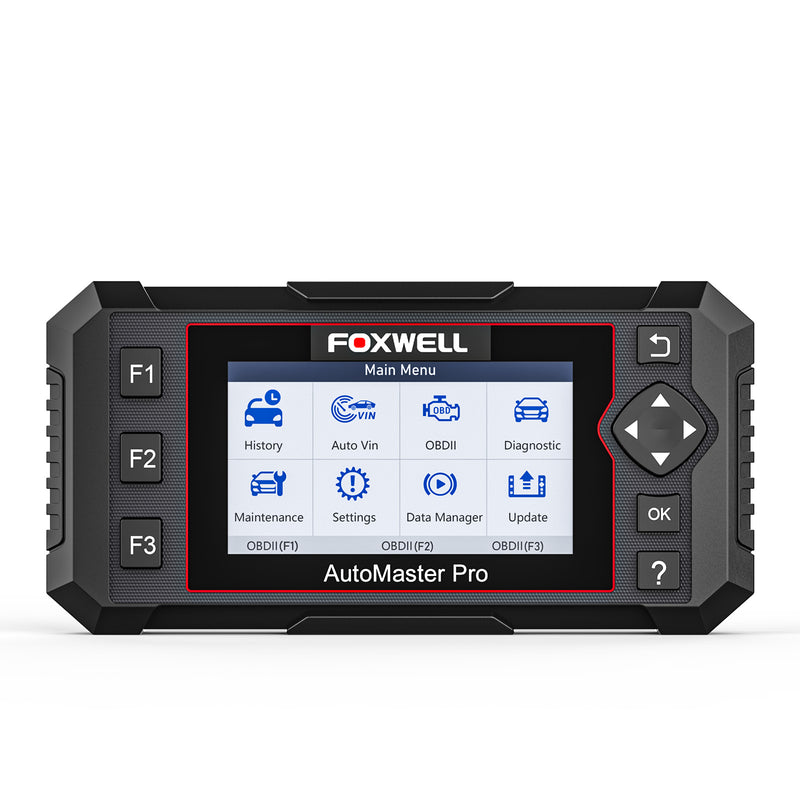 Foxwell NT624 Elite |
|---|---|---|
| Target User | Professional technicians / advanced diagnostics | DIY users & cost-conscious owners |
| Engine & Full-System Diagnosis | ✔ Full-system OEM-level diagnosis | ✔ Engine & major system diagnosis |
| VVT / Camshaft Adjuster Codes | ✔ Reads OEM-specific VVT codes (e.g., Audi P001100, Mercedes P001201) ✔ Generic codes P0010–P0014 |
✔ Reads & clears OEM / generic VVT codes ✔ Check engine light reset |
| Live VVT Data Monitoring | ✔ Real-time cam timing angle ✔ VVT duty cycle ✔ 4-channel live graphing |
✔ Real-time cam timing angle ✔ VVT duty cycle ✔ Basic live graphing |
| Bi-Directional Control | ✔ Actively commands solenoid ON/OFF ✔ Verifies ECU instruction response ✔ Confirms physical solenoid movement |
✘ Not supported |
| VVT Solenoid Performance Testing | ✔ Direct solenoid activation testing ✔ Distinguishes oil pressure, wiring, or ECU issues |
✘ Not available |
| Freeze Frame Data | ✔ Supported | ✔ Supported |
| Misdiagnosis Prevention | ✔ High — confirms mechanical response ✔ Ideal for German VVT systems |
△ Moderate — relies on data interpretation only |
| Best Use Case | Accurate confirmation of camshaft adjuster solenoid failure Avoids replacing actuators or timing components unnecessarily |
Initial fault screening and decision-making Determine whether further professional diagnosis is needed |
Also read: Foxwell GT60 Review
Camshaft Adjuster Solenoid Replacement & Cost
Typical Location
On most German vehicles, the solenoid is:
- Mounted on the front or top of the cylinder head
- Easily accessible on Audi A4, Mercedes C-Class, and VW Passat engines
DIY Replacement Steps (5 Basic Steps)
- Disconnect battery
- Remove electrical connector
- Remove retaining bolt
- Replace O-ring
- Install new solenoid
Post-Installation Reset
After replacement:
- Clear fault codes
- Perform VVT adaptation or timing reset using a Foxwell GT60 or NT624 Elite – both scanners support VVT timing reset for German cars and Mitsubishi after solenoid replacement, ensuring the new component works with the ECU seamlessly.
- Verify cam timing data under real driving conditions
Cost Breakdown
- Aftermarket part: $50–$120
- OEM part: $150–$200
- Labor: $100–$300 depending on vehicle
Camshaft Adjuster Solenoid vs Camshaft Actuator: What’s the Difference?
This is one of the most confusing areas for vehicle owners—and honestly, even parts catalogs don’t always help.
In real-world repairs, these terms are often used interchangeably, which causes confusion. For example, many Mitsubishi and German vehicles list the same part as a “VVT solenoid” in one catalog and a “camshaft adjuster solenoid” in another, even though they refer to the same oil control valve.
That said, there is a technical distinction worth understanding.
| Feature | Camshaft Adjuster Solenoid | Camshaft Actuator |
|---|---|---|
| Role | Control component (VVT "switch") | Execution component (VVT "mover") |
| Function | Regulates oil pressure to trigger timing adjustment | Physically adjusts camshaft angle via oil pressure |
| Location | Near engine valve cover (easily accessible) | On camshaft end (deep engine placement) |
| Failure Probability | Higher (80% of VVT issues) | Lower (20% of VVT issues, often secondary) |
|
Related Codes |
P0010, P0011, P0012, P0013, P0014 | P0011, P0012(Under normal conditions of the solenoid) |
| Common Symptoms | Check engine light (P0011/P0012), rough idle, cold-start rattle | Severe power loss, timing misalignment, loud engine knocking |
| Replacement Cost | $50–$200 (parts) + $100–$300 (labor) | $300–$800 (parts) + $200–$500 (labor) |
| DIY Difficulty | Easy-Moderate (1–2 hours, basic tools) | Difficult (3–5 hours, specialized tools) |
| How to Diagnose | Fault codes + bidirectional control test | Timing angle data + mechanical inspection |
Bottom Line (User-Friendly Takeaway)
- When there are issues with the circuit, abnormal oil pressure control, or codes such as P0010-P0014, it is usually advisable to first suspect the camshaft adjuster solenoid.
- Only when the solenoid has been confirmed to be functioning properly, but the camshaft timing is still stuck or not responding, should a further inspection of the camshaft actuator (phaser) be conducted.
FAQ:
Can You Drive with a Bad Camshaft Adjuster Solenoid?
You can drive short distances in an emergency, but it’s not safe or recommended—especially for German cars (Audi, Mercedes, VW). Even minor solenoid issues will quickly escalate into costly engine damage, with German models at higher risk of timing misalignment due to their high-precision VVT systems.
Specific risks & consequences:
- Accelerated Camshaft Actuator (Phaser) Wear
- Timing Misalignment (Common on German Engines)
- Catalytic Converter Damage
- Cylinder Wall & Valvetrain Stress (Long-Term Risk)
Driving briefly to a repair shop is usually okay. Driving for weeks or months is not—especially if the check engine light is flashing or cold-start noise is present.
Can You Clean a Camshaft Adjuster Solenoid Instead of Replacing It?
When Cleaning Is Worth Trying
- The solenoid moves freely and isn’t electrically damaged
- No open/short circuit codes (P0010/P0013 absent)
- Vehicle has a history of sludge or extended oil change intervals
- The solenoid is expensive (common on German & Mitsubishi vehicles)
In these cases, cleaning with brake cleaner or solvent can remove varnish and oil debris blocking the internal screen.
Cost vs. Success: $5–$20 (brake cleaner/electrical cleaner) for a 30–50% temporary success rate (fixes the issue for 3–6 months if oil is immediately changed).
When Cleaning Is Not Worth It
- Electrical resistance is out of spec
- The solenoid is physically damaged
- The valve sticks even after cleaning
- The vehicle repeatedly throws the same code shortly after cleaning
Cost vs. Success: Wasted time/money with a <20% success rate; you’ll still need to replace the solenoid, and delayed repair risks actuator damage.
What Does Bank 1 / Bank 2 Mean for Camshaft Adjuster Solenoids?
- Bank 1 = The side of the engine containing cylinder #1
- Bank 2 = The opposite cylinder bank (V-engines only)
For inline engines (I4, I5, I6):
- There is only Bank 1
- You still may have two solenoids (intake & exhaust)
For V6 / V8 engines:
-
Each bank typically has:
1 intake solenoid
1 exhaust solenoid
Always confirm:
- Bank number
- Intake vs exhaust position
before ordering parts—VIN lookup alone can be misleading.
Can a Bad Camshaft Adjuster Solenoid Cause Engine Damage?
Yes—indirectly, and over time.
A failed solenoid doesn’t usually destroy an engine immediately, but it can trigger a chain reaction:
-
Immediate: Rough idle, power loss, increased fuel consumption (minor, non-damaging).
-
Short-term (1–2 weeks): Camshaft actuator wear, timing misalignment, engine knock/rattle.
-
Long-term (unfixed): Catastrophic damage including piston/valve contact (拉缸), bent valves, cracked cylinder heads, or seized camshafts—repairs that often cost more than the vehicle’s value.
- Secondary damage: Catalytic converter failure, oxygen sensor damage, and oil system contamination (sludge from incomplete combustion).
Key German car risk: Many Audi/Mercedes/VW engines use direct injection and have high oil consumption—solenoid failure exacerbates oil degradation, leading to faster sludge buildup and more extensive engine damage.
Is It Safe to Clean or Replace It Yourself?
-
Cleaning:
Generally safe for DIYers with basic tools. -
Replacement:
Safe on many vehicles, but:
Access can be tight on German engines
Intake/exhaust solenoids are easy to mix up
Some vehicles require a VVT relearn or reset after replacement
A scan tool that supports VVT reset or adaptation significantly reduces post-repair issues.
Is a VVT solenoid the same as a camshaft adjuster solenoid?
In most modern VVT systems—especially on Mitsubishi, Audi, Mercedes, and Volkswagen engines—the terms “VVT solenoid,” “camshaft adjuster solenoid,” and “camshaft position actuator solenoid” usually refer to the same oil control valve.
While the names vary by manufacturer and catalog, the function is the same: regulating oil pressure to control camshaft timing. The confusion comes from inconsistent naming rather than different parts.
How many camshaft adjuster solenoids does a car have?
Most DOHC (dual overhead camshaft) engines have two camshaft adjuster solenoids:
- One for the intake camshaft
- One for the exhaust camshaft
Some engines may have only one, depending on design, while others (with dual VVT on both banks) may have four. Always verify intake vs exhaust and Bank 1 vs Bank 2 before replacement.
Recommend reading:
Foxwell GT60 vs NT726: Which Diagnostic Tool Fits Your Real-World Repairs?
Understanding Fuel Pressure Sensors for Maximum Car Efficiency

Leave a comment
This site is protected by hCaptcha and the hCaptcha Privacy Policy and Terms of Service apply.