


If your vehicle's brakes still feel soft or spongy after servicing them, the cause could be the air that has entered its ABS (Anti-lock Braking System) module after a brake job or when air enters your master cylinder.
Bleeding the lines alone might not resolve this problem, as air trapped in an ABS module requires specific procedures involving a scan tool to activate it during bleeding.
However, you don't need to buy expensive tools or go to a professional shop just for this task—we will examine cost-effective tools and practical techniques for activating the ABS bleed procedure, along with tips for restoring your brakes to their former glory.
Reasons Why ABS Systems Require Bleeding Procedures

An ABS is designed to prevent your wheels from locking up during hard braking by employing sensors and valves to regulate brake pressure when it detects potential skidding incidents. When bleeding ABS systems, however, air can get trapped inside its internal passages and valves, requiring special procedures to unclog.
However, unlike brake lines, which can be easily bled with traditional methods, the ABS module requires activation to open its valves and force air out. Without this activation, even after regular bleeding, air could remain trapped within the system, leading to soft or nonresponsive brakes. As a result, a scan tool is usually necessary to engage and activate the ABS system and properly bleed your brakes.
Signs that It Is Time to Bleed Your ABS Module
If air is trapped within your ABS module, specific symptoms could manifest even after performing a standard brake bleed.
One telltale sign is a soft or "mushy" brake pedal when pressed or repeated pumping of the pedal; another may be that your brakes firm up after repeatedly pumping them; it might also take longer for your vehicle to stop or require more significant pressure on its pedal to be effective in preventing.
Sometimes, the ABS warning light on your dashboard might illuminate to indicate an issue with the system. If any such problems surface after working on your brakes, it's likely that your ABS module needs to be bled.
Affordable Scan Tools for ABS Bleeding
Professional shops may use expensive scan tools for ABS bleeding or use a Brake Bleeding Tool designed for DIY mechanics, which can simplify the process of removing air from ABS modules. Still, you can also find more budget-friendly versions from Foxwell that provide similar functionality - these budget-friendly models from Foxwell would make an excellent addition to DIY mechanics:
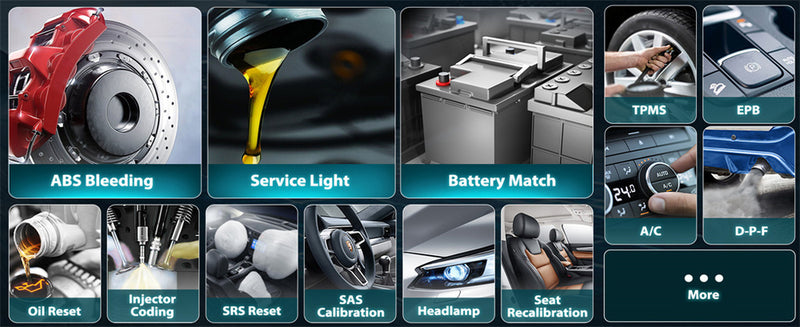
- Foxwell NT809: For those searching for more advanced features, the Foxwell NT809 provides comprehensive system coverage—including ABS—across various vehicles and can handle both bleeding and more complex tasks such as oil resets or battery configuration. With its user-friendly interface and advanced diagnostic capabilities, this tool makes ideal vehicle maintenance tasks possible.
- Foxwell NT650 Elite:This tool balances affordability and functionality, supporting ABS bleeding and other necessary vehicle maintenance procedures like electronic parking brake resets and service light resets. Ideal for those who perform both ABS procedures and ongoing vehicle care services, this cost-effective option makes an affordable addition to your toolbox.
- Foxwell RT1000: Another budget-friendly option is the Foxwell RT1000, which also supports ABS bleeding for DIY mechanics and is easy to use across various vehicle models.
These tools are easy to use and compatible with various vehicle models, making them excellent choices for activating ABS bleed functions without spending a great deal.
Related Reading: Best Brake Bleeder – Find the Right Tool for Your Car’s Brake System
Can an OBD2 scanner read ABS?
Yes—but only certain types of OBD2 scanners can read ABS codes.
Basic OBD2 code readers are primarily designed to access the vehicle's engine control module (ECM) and retrieve emissions-related diagnostic trouble codes. These entry-level scanners typically cannot communicate with other vehicle systems such as ABS, airbags, or transmission modules.
To read ABS codes, the scanner must support multi-system diagnostics and be capable of communicating with the vehicle's ABS control module.
Tools that can read ABS data usually provide access to information such as:
- ABS diagnostic trouble codes
- Wheel speed sensor data
- Brake pressure readings
- ABS module status
Based on our diagnostic team's testing across multiple vehicle platforms, mid-range diagnostic scanners are often the most practical choice for DIY mechanics because they can read ABS codes while also supporting service functions such as ABS bleeding.
In contrast, very basic code readers usually lack this capability and will only display engine-related fault codes.
What Features Should an ABS Bleeding Scan Tool Have?
Not every OBD2 scanner can perform ABS bleeding. To properly cycle the ABS pump and valves, the tool must support a dedicated ABS Auto Bleed or ABS Service Function.
When choosing a scan tool for ABS bleeding, look for the following features:
- ABS Auto Bleed Function – Allows the scanner to command the ABS module to cycle its internal valves and pump during brake bleeding.
- Bidirectional Control – Enables manual activation of components like the ABS pump motor and solenoid valves.
- Full System Diagnostics – Access to ABS, brake pressure sensors, and wheel speed sensors.
- Vehicle Compatibility – Ensure the tool supports your specific make, model, and year.
Many professional scan tools include these capabilities, while basic code readers typically do not support ABS bleeding procedures.
For DIY mechanics, mid-range diagnostic scanners are often sufficient for performing ABS brake bleeding safely and effectively.
How to Choose the Right Scan Tool for ABS Bleeding (Budget vs Professional)
The table below shows the typical capability differences between entry-level scanners and diagnostic tools that support ABS bleeding.
| Feature | Basic Code Reader | Mid-Range Scan Tool | Professional Diagnostic Tool |
|---|---|---|---|
| Read ABS codes | ✔ | ✔ | ✔ |
| ABS Auto Bleed | ❌ | ✔ | ✔ |
| Bidirectional Control | ❌ | Limited | ✔ |
| System Coverage | Engine only | Multiple systems | Full vehicle systems |
| Typical Price | $30–$80 | $120–$300 | $800+ |
Most DIY users choose mid-range scan tools like the Foxwell NT630 Plus or NT650 Elite because they support ABS bleeding without the cost of professional diagnostic platforms.
Manual Methods for Bleeding ABS Brakes Without a Scan Tool
Even without access to a scan tool, manual methods exist to activate and purge air from an ABS and eliminate trapped air. One such approach involves driving on low-traction surfaces and performing controlled hard stops; this can activate the ABS by simulating wheel lockup and engaging its pump and valves, triggering wheel lockup to trigger its activation and remove any trapped air that remains.
An alternative strategy involves repeated hard braking in a controlled, safe environment, such as an empty parking lot. Although this method may be less precise, it may cause your ABS to activate and force air out of its module, making the bleed-back more straightforward afterward.
Although manual methods might only sometimes work for some vehicles, they provide an inexpensive first step before resorting to more costly tools or professional assistance.
Can You Really Bleed ABS Brakes Without a Scan Tool?
In some vehicles, it is technically possible to bleed ABS brakes without a scan tool, but the results are not always reliable.
Modern ABS systems contain internal valves and hydraulic passages that may trap air inside the module. Without electronically activating these valves, air pockets may remain even after traditional bleeding.
Situations where manual ABS bleeding may work:
- Minor air intrusion in brake lines
- Older ABS systems
- Vehicles with simpler hydraulic designs
Situations where a scan tool is strongly recommended:
- Air trapped inside the ABS hydraulic module
- Brake system component replacement
- Master cylinder replacement
- ABS warning light present
If manual bleeding does not restore a firm brake pedal, using a scan tool to perform an ABS auto-bleed procedure is usually required.
Do You Always Need a Scan Tool to Bleed ABS Brakes?
Many DIY mechanics assume that a scan tool is always required to bleed ABS brakes, but this is not always the case.
In many vehicles, a scan tool is only necessary if air has entered the ABS hydraulic module itself. If the air remains only in the brake lines, conventional bleeding procedures may be enough to restore proper braking performance.
Situations where a scan tool may NOT be required:
- Minor brake line repairs
- Brake pad or rotor replacement
- Air limited to brake lines only
However, a scan tool becomes important when:
- The ABS hydraulic module contains trapped air
- The master cylinder ran dry during service
- ABS components were replaced
- The brake pedal remains soft after normal bleeding
Many technicians first perform a conventional brake bleed and only run the ABS auto-bleed function if the pedal still feels spongy.
Step-by-Step Guide for an ABS Bleed Procedure
The process for bleeding an ABS should be straightforward whether using a scan tool or manual methods; here's a step-by-step guide that should make things simpler:
- Lift Your Vehicle: Before beginning, lift your vehicle safely to access its brake calipers and lines.
- Prepare the Bleeders: Attach speed or pressure bleeders to the brake lines, starting from the wheel farthest from the master cylinder (usually the rear passenger side).
- Engage the ABS System: If you own a scan tool, follow its instructions to activate the ABS bleed feature and run through its cycles before opening all valves to allow air from your module.
- Bleed the Brakes: Once your ABS is active, bleed your brake lines using either steady pedal pressure or a pressure bleeder to maintain consistent pressure levels in each line.
After bleeding all brakes, carefully evaluate how firm or soft the pedal feels. If it still seems soft after several attempts at bleeding air out, repeat this process until all air has been eliminated from the pedal.
How a Scan Tool Activates the ABS Module During Bleeding
During an ABS bleeding procedure, a scan tool communicates with the vehicle's ABS control module to activate the hydraulic pump and internal solenoid valves.
This process is necessary because trapped air inside the ABS unit cannot be removed through normal brake bleeding alone.
The scan tool typically performs the following actions:
- Activates the ABS pump motor.
- Opens and closes the internal brake valves.
- Cycles the system several times to push trapped air into the brake lines.
Once the air moves into the brake lines, standard bleeding at the brake calipers removes it from the system.
Without this activation step, air may remain trapped in the ABS hydraulic block, causing a soft or spongy brake pedal.
Can You Activate the ABS Pump Without a Scan Tool?
Based on observations by our professional automotive diagnostic team, some mechanics use a simple trick to activate the ABS pump without a scan tool.
After performing a normal brake bleed, they drive the vehicle to a low-traction surface such as a gravel road or empty parking lot and perform several hard braking events. This forces the ABS system to activate, which cycles the pump and internal valves.
When the ABS pump cycles, trapped air inside the hydraulic unit may move back into the brake lines.
After activating the ABS several times, the brakes can be bled again using the normal procedure.
This method may need to be repeated two or three times before all air is removed.
Important:
This technique should only be done in a safe and controlled environment.
Troubleshooting: Why Your Brakes Still Feel Soft After Bleeding
If your brakes feel soft after performing an ABS bleed, several potential causes could be at play. One possibility is that not all air was effectively expelled during the bleeding process; perhaps some air remains trapped within your system because your bleeding was interrupted or not completed correctly.
Old or contaminated brake fluid could also be to blame. Maintaining optimal brake performance relies on using fresh, high-quality fluid. When old fluid has absorbed moisture, it can significantly decrease efficiency while giving an uneven pedal feel and creating an unsafe stopping experience.
The master cylinder itself could be the finalizing factor in our investigation. When worn or damaged, master cylinders may fail to provide enough pressure for brake system operation, leading to soft pedaling. If this is the case, replacing the master cylinder may be necessary.

How to Select the Appropriate Brake Fluid for ABS Systems
When bleeding an ABS system, the appropriate type of brake fluid must be used—typically, either DOT 4 or 5.1 fluid is required, depending on the vehicle type.
DOT 4 brake fluid is commonly found in vehicles equipped with ABS. Although its boiling point is high, moisture absorbs into it over time and affects braking performance. High-performance or heavy-duty vehicles would benefit more from using DOT 5.1 fluid with even higher boiling point levels; make sure to use fresh fluid from an unopened bottle to ensure optimal performance and prevent moisture contamination.
Conclusion
Bleeding an ABS system doesn't need to be complicated or expensive; all it requires are the appropriate tools, such as Foxwell NT809, or NT650 Elite scan tools, to activate and perform proper brake bleed. DIY mechanics will appreciate these budget-friendly scan tools, which offer not just ABS bleeding capabilities but a range of diagnostic tasks as well.
If you prefer manual methods over purchasing a scan tool, controlled hard stops on low-traction surfaces may activate ABS and push air out of the system, activating ABS. Following proper procedures ensures your brakes will work safely and efficiently.
FAQs
What is ABS bleeding?
ABS bleeding is the process of removing air from the Anti-lock Braking System (ABS) to ensure proper brake function. It involves activating the ABS pump and valves to push air out of the ABS module, which can get trapped during brake system repairs.
How do you bleed an ABS sensor?
You don't typically "bleed" an ABS sensor, as it's an electronic component that detects wheel speed. However, to bleed the ABS system, you need to activate the ABS module (usually with a scan tool) so that the internal pump and valves cycle, allowing air to be expelled during the brake bleed process.
What tool is required to bleed the ABS system?
A scan tool that can activate the ABS module, such as the Foxwell NT809, or Foxwell NT650 Elite, is commonly used to bleed the ABS system. These tools allow you to engage the ABS pump and valves to ensure proper bleeding.
How to Bleed Air Out of an ABS System
Removing air from an ABS braking system usually requires both a standard brake bleeding procedure and activation of the ABS hydraulic unit.
In many modern vehicles, air can become trapped inside the ABS module after brake line repairs, master cylinder replacement, or when the brake fluid reservoir runs dry. Because the ABS unit contains internal valves and passages, normal brake bleeding alone may not remove all trapped air.
The most effective method typically involves the following steps:
- Perform a conventional brake bleed starting from the wheel farthest from the master cylinder.
- Use a scan tool with an ABS Auto Bleed function to activate the ABS pump and solenoid valves.
- Run the ABS bleeding procedure through the scan tool.
- Bleed the brake lines again after the ABS pump cycles.
Based on feedback from experienced technicians and discussions across several automotive repair communities, this two-stage bleeding process is the most reliable way to remove air from the ABS hydraulic module.
If a scan tool is not available, some mechanics attempt to activate the ABS system by performing controlled hard braking on a low-traction surface and then bleeding the brakes again. While this technique may work on certain vehicles, it is generally less precise than using a diagnostic scanner.
Do all scan tools support ABS bleeding?
No. Many basic OBD2 code readers only read diagnostic trouble codes and cannot perform service functions.
To bleed ABS brakes properly, the scan tool must support an ABS Auto Bleed or ABS Service Function, which allows it to activate the ABS pump and valves during the bleeding process.
What is the best scan tool for ABS bleeding?
The best scan tool for ABS bleeding depends on your vehicle compatibility and diagnostic needs.
Professional diagnostic scanners with ABS service functions can activate the ABS module, cycle valves, and remove trapped air during brake bleeding procedures.
What Is the Correct Brake Bleeding Order for ABS Systems?
Correct bleeding order is critical when servicing brakes on ABS-equipped vehicles.
In most vehicles, the recommended bleeding sequence is:
- Right Rear
- Left Rear
- Right Front
- Left Front
This order ensures that air is removed from the longest brake lines first.
However, some manufacturers may use a different sequence depending on the brake system design. Always consult the vehicle's factory service manual to confirm the correct bleeding order.
Can air get trapped inside the ABS module?
Yes. Air can become trapped inside the ABS hydraulic module, especially after brake line failures, master cylinder replacement, or when the brake fluid reservoir runs dry.
Because the ABS unit contains internal valves and accumulators, normal bleeding may not remove this trapped air.
In these situations, a scan tool that supports ABS auto bleed is usually required to cycle the pump and valves and purge the air from the system.


Leave a comment
This site is protected by hCaptcha and the hCaptcha Privacy Policy and Terms of Service apply.