

Quick Summary
· What it does: Regulates air bypassing the throttle plate to maintain stable idle speed
· Normal idle RPM: 600–1,000 RPM (most passenger vehicles)
· Most common fix: Carbon cleaning with throttle body cleaner (~$10)
· Replacement cost: $50–$500 for the part; add $50–$150 labor if professional
· Found on: Fuel-injected vehicles (primarily pre-2005; newer cars use electronic throttle control)
What Is an Idle Air Control Valve?
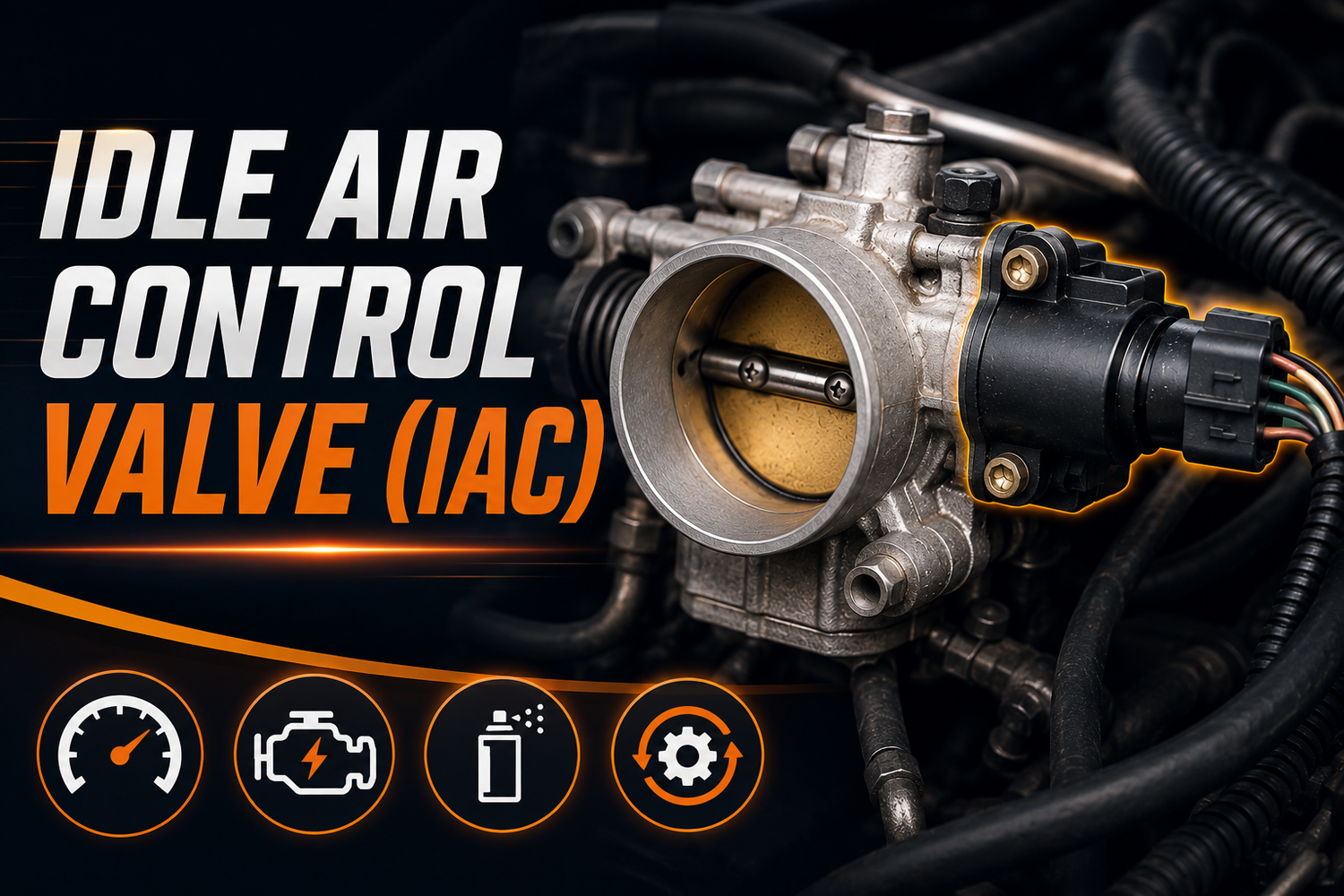
The idle air control valve — also called the IAC valve, IAC actuator, or auxiliary air valve — is an electronically controlled device found on fuel-injected vehicles. Its job is to regulate the engine's idle rotational speed (RPM) by controlling how much air bypasses the closed throttle plate.
In simple terms: when you're not pressing the gas pedal, the throttle plate is nearly shut. The IAC valve creates a small bypass passage that lets a precise amount of air into the intake manifold, keeping the engine running smoothly rather than stalling.
|
Feature |
IAC Valve (Traditional) |
Electronic Throttle Control (Modern) |
|
Typical vehicles |
Pre-2005 fuel-injected |
2005+ fly-by-wire vehicles |
|
Idle control method |
Separate bypass valve |
Throttle body motor (no separate IAC) |
|
Failure mode |
Carbon buildup, electrical fault |
Throttle body motor or TPS sensor |
|
DIY cleaning |
Yes — removable valve |
Throttle body cleaning only |
Why Are Idle Air Control Valves Important?
Engine speed in a gasoline engine is determined by airflow. When you press the accelerator, the throttle plate opens; when you release it, the plate nearly closes. Without the IAC valve, a fully closed throttle would starve the engine of air and cause an immediate stall every time you came to a stop.
The IAC valve is also responsible for managing engine load changes at idle — for example, when you turn on the air conditioning or engage the power steering. Each of these accessories draws extra load on the engine, and the IAC valve compensates by opening slightly to deliver more air and prevent stalling.
How Does the IAC Valve Work?
The IAC valve operates as part of a closed-loop feedback system managed by the vehicle's Powertrain Control Module (PCM) or Engine Control Unit (ECU).
Here's the sequence:
1. Engine starts idling — throttle plate is closed
2. PCM reads sensor data — coolant temp, RPM, throttle position, and load from accessories
3. PCM sends a signal — opens or closes the IAC valve's pintle (plunger) to adjust airflow
4. Air bypasses throttle plate — enters the intake manifold, raising or lowering RPM
5. Loop repeats — constantly adjusting to maintain target idle speed
Most IAC valves use either a stepper motor (which moves in precise incremental "steps") or a solenoid (single or dual coil) to position the pintle. The PCM controls position via a PWM (pulse-width modulated) signal. At a healthy idle, the opening solenoid duty cycle is typically around 40–45%.
What Causes Idle Air Control Valve Failures?
The IAC valve is designed to last the lifetime of the vehicle, but premature failure is common for several reasons:
|
Cause |
Description |
Fix |
|
Carbon buildup |
Most common cause. Deposits from crankcase ventilation and EGR gases block the air passage and jam the pintle |
Cleaning |
|
Electrical failure |
Broken wires, corroded connector, or failed coil windings |
Wire repair or replacement |
|
Mechanical wear |
Internal motor or pintle mechanism wears out over high mileage |
Replacement |
|
Oil contamination |
Oil from crankcase vapors coats valve internals, causing sticking |
Cleaning; fix PCV system |
|
Vacuum leaks |
A cracked hose near the throttle body can mimic IAC symptoms |
Inspect and replace hoses |
Common Symptoms of a Faulty Idle Air Control Valve
The key diagnostic pattern: symptoms appear at idle and improve or disappear while driving. If your issues only occur when the car is stopped or during startup — not while accelerating — the IAC valve is a strong suspect.
1. Erratic or Fluctuating Idle Speed
RPM needle bounces up and down unpredictably at idle. Normal idle is 600–1,000 RPM. Readings consistently outside this range suggest IAC trouble.
2. Engine Stalling at Stops
Engine cuts out when you brake to a stop, especially noticeable when the A/C or power steering is engaged. The IAC can't compensate for the added load.
3. Rough or Lumpy Idle
Engine vibrates or feels uneven when sitting still. Air-fuel mixture is inconsistent due to irregular airflow through the IAC passage.
4. Hard Cold Starts
Classic early-warning sign: rough idle or stalling on cold start that gradually improves after 5–10 minutes of running. The IAC valve struggles to compensate for cold enrichment demands.
5. High Idle Speed
Engine idles at 1,500–3,000+ RPM with no accelerator input. The valve is stuck in the open position, allowing too much air into the intake.
6. Check Engine Light (CEL)
The PCM detects an IAC-related fault and stores a Diagnostic Trouble Code (DTC). Common codes include P0505 (IAC system malfunction), P0506, P0507.
7. Engine Backfiring
A bad IAC can create a rich fuel mixture. Excess unburned fuel escapes to the exhaust and ignites, causing backfiring when you release the throttle.
8. Accessory-Triggered Stalling
Engine stumbles or stalls specifically when you switch on the A/C, headlights, or rear defroster. The IAC cannot open fast enough to handle the sudden load increase.
What Happens When the Idle Air Control Valve Goes Bad?
When the IAC valve fails, the engine loses its ability to manage idle speed independently of the throttle. The consequences depend on whether the valve is stuck open or stuck closed:
| 🔧 Failure State | 📊 Effect on Idle | 🚨 Driving Risk |
|---|---|---|
| 🟢 Stuck open | ⬆️ High idle (1,500 RPM+); engine won't settle | 🚗 Vehicle hard to control from rest; creep in drive |
| 🔴 Stuck closed | ⬇️ Low idle; frequent stalling, especially at stops | ❗ Safety risk — stalling at intersections |
| 🟡 Intermittent | 🔄 RPM hunting (surging up and down) | ⚠️ Unpredictable; may or may not cause stalling |
A malfunctioning IAC valve can also cause your vehicle to fail emissions tests if the Check Engine Light is illuminated, as required by state/local emissions regulations in many parts of the United States.
How to Diagnose a Faulty IAC Valve
Use these steps in order before purchasing any replacement parts. The goal is to confirm the IAC is the actual culprit — not a vacuum leak, wiring fault, or unrelated sensor — before spending money on parts.
Step 1: Read Diagnostic Trouble Codes (DTCs)
Plug an OBD-II scanner into the diagnostic port under the dashboard (engine off, ignition on). Look for these IAC-related codes:
· P0505 — Idle Control System Malfunction
· P0506 — Idle Control System RPM Lower Than Expected
· P0507 — Idle Control System RPM Higher Than Expected
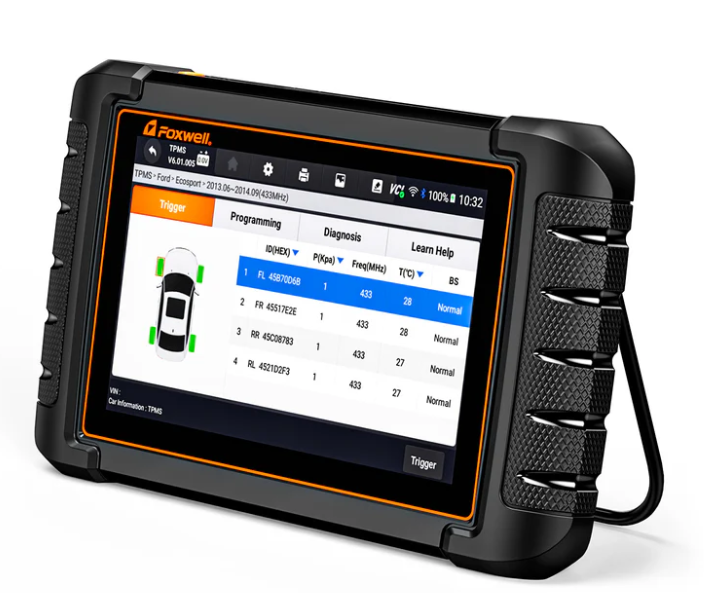
Beyond reading codes, the most useful thing a scanner can do at this stage is display live RPM data. Watching the idle RPM stream in real time tells you whether the engine is actually hunting, what the actual idle figure is, and whether the ECU is even trying to compensate — all before you touch a wrench.
💡 Tool Tip: Choosing a Scanner for IAC Diagnosis
Not all scanners give you the same depth of information for an idle issue. Here's a quick breakdown of what each level offers:
|
Scanner |
Read/Clear P0505–P0507 |
Live RPM & Sensor Data |
Throttle Relearn / IAC Reset |
Active IAC Test |
|
✅ |
✅ (engine RPM, coolant temp, O₂, fuel trim) |
❌ |
❌ |
|
|
✅ |
✅ |
✅ (Throttle Relearn included) |
❌ |
|
|
✅ |
✅ |
✅ (Throttle Relearn + 30+ resets) |
✅ (bidirectional — can command IAC directly) |
If you're diagnosing a single idle issue and want to confirm the code then move on, the NT301 does the job at the lowest cost.
If you also want to run a throttle relearn after cleaning or replacing the IAC, the NT614 Elite adds that without a significant jump in price.
The NT809BT is the right call if you want to actively command the IAC valve (bidirectional control) to confirm whether it's mechanically responsive before deciding to replace it.
Note: A weak IAC can sometimes cause problems without triggering the Check Engine Light. Always continue with visual inspection even if no codes are stored.
Step 2: Visual Inspection
With the engine off, locate the IAC valve on or near the throttle body. Check for:
· Damaged or cracked vacuum hoses (vacuum leaks mimic IAC symptoms)
· Loose, corroded, or broken wiring at the electrical connector
· Heavy carbon deposits visible at the valve port
Step 3: Disconnect Test (Engine Running)
With the engine at warm idle, unplug the IAC valve connector. The idle speed should change — typically dropping noticeably. If unplugging the IAC makes no difference to idle speed or quality, the valve is already stuck in a fixed position and not contributing to idle control. Note: this test does not work on all vehicle platforms.
Step 4: Multimeter Resistance Test
With the IAC valve removed and disconnected, set a multimeter to the Ohms (Ω) setting. Place the probes on the IAC connector pins and measure resistance across each coil winding.
| Reading | Interpretation | Action |
|---|---|---|
| 🟢 10–40 Ω (within spec) | Internal coil windings are healthy | Valve is likely dirty — clean it first |
| 🔴 Near 0 Ω (short circuit) | Internal short — valve is compromised | Replace valve |
| ⚫ Infinite / OL (open circuit) | Broken coil winding — valve is dead | Replace valve |
How to Reset the Idle Air Control Valve
After cleaning or replacing the IAC valve, the ECU must relearn the correct idle position. Skipping this step is one of the most common reasons people think their IAC repair didn't work.
Method 1: Battery Disconnect Reset
1. Disconnect the negative battery terminal
2. Wait 15–20 minutes (allows ECU memory to clear)
3. Reconnect the negative terminal
4. Start the engine and let it idle for 10–15 minutes without turning on A/C or other accessories
5. The ECU will relearn the IAC valve's baseline position
Method 2: Idle Relearn via OBD-II Scanner (Recommended)
The battery disconnect method works in most cases, but it also clears other adaptive data the ECU has built up over time — including fuel trims and transmission shift points. For a cleaner result, use a scanner that supports a dedicated throttle or idle relearn function.
1. Warm the engine to normal operating temperature
2. Turn off all accessories (A/C, radio, rear defroster)
3. Let the engine idle for 10 minutes undisturbed
4. Use a scanner to confirm idle RPM is within the normal 600–1,000 RPM range
5. Take a test drive, paying attention to idle behavior at stops and in neutral
A successful reset will show smooth, consistent idle speed and no stalling. If erratic idle persists after resetting, further diagnosis is required.
Where Is the Idle Air Control Valve Located?
The IAC valve is mounted on or adjacent to the throttle body,which is part of the intake manifold. It connects to the throttle body via a bypass passage and has an electrical connector attached to it via multiple wires.
 📍How to Find It: Open the hood. Follow the large air intake duct from the air filter box — it connects to the throttle body. The IAC valve is a small cylindrical or rectangular component bolted to the throttle body, with an electrical connector plugged into it. Refer to your vehicle's service manual for the exact location, as it varies by make and model.
On most common platforms, you'll find the IAC valve in these general areas:
· GM V8/V6 engines: Mounted on the throttle body, accessible from the top
· Ford EFI engines: On the throttle body or intake manifold side
· Honda/Acura: On the throttle body, sometimes partially obscured by intake plumbing
· Toyota/Nissan: On the throttle body; some models use a separate idle air control solenoid
How Do I Test the Idle Air Control (IAC) Valve in My Car?
Here is the complete at-home testing process combining all diagnostic methods:
1. Gather tools: OBD-II scanner, multimeter, screwdriver set, 10mm socket, electronic parts cleaner
2. Scan for DTCs — note any P0505/P0506/P0507 codes; check live RPM stream for idle instability
3. Perform visual inspection — check hoses, wiring, connector
4. Remove the IAC valve from the throttle body (typically 2–3 screws)
5. Inspect the pintle for carbon buildup or physical damage
6. Measure resistance with a multimeter — healthy range is 10–40 Ω (verify against your service manual)
7. Clean if within spec — spray throttle body cleaner into the valve body and passage
8. Reinstall, reset, and retest
Test your IAC valve every 60,000–100,000 miles as part of routine maintenance, or whenever irregular idling symptoms appear.
How to Clean an Idle Air Control Valve Without Removing It
⚠️ Important Note:Automotive professionals generally recommend removing the IAC valve for proper cleaning. Cleaning without removal delivers limited results because the internal passages and pintle cannot be thoroughly cleaned. However, if you prefer a quick first-pass attempt, here's how.
In-Place Cleaning Method:
1. Warm the engine to operating temperature, then shut it off
2. Locate the IAC valve on the throttle body
3. Disconnect the air intake duct from the throttle body to gain access to the throttle bore
4. With the engine off, spray throttle body cleaner into the throttle bore opening and into the IAC air passage port
5. Use a clean rag to wipe away any accessible carbon deposits
6. Reconnect the intake duct
7. Start the engine and allow it to idle; the cleaner will work through the system
For complete cleaning (recommended): Remove the valve, spray throttle body cleaner into the valve body and internal passages, allow to drain, air dry completely, and reinstall with a new gasket to maintain a proper vacuum seal. Do not use harsh carburetor cleaners — they can damage plastic components and internal coatings. Do not manually force the pintle inward while cleaning, as this can damage the internal motor mechanism.
Preventive Measures and Maintenance Tips
· Clean the throttle body regularly — every 30,000–50,000 miles. Since the IAC valve is adjacent to the throttle body, cleaning the throttle body helps prevent carbon migration into the IAC passage.
· Replace the air filter on schedule — a dirty air filter increases particulate contamination throughout the intake system.
· Service the PCV (Positive Crankcase Ventilation) system — a faulty PCV valve allows oil vapors to coat the throttle body and IAC valve, accelerating carbon buildup.
· Inspect vacuum hoses annually — cracked or deteriorated hoses near the throttle body create vacuum leaks that mimic IAC failure symptoms.
· Use quality fuel — higher detergent-grade fuels (Top Tier certified) reduce combustion deposits throughout the intake system.
· Scan for codes proactively — running a quick scan every few oil changes takes minutes and catches developing IAC issues (like early P0506 soft codes) before they cause drivability problems.
Conclusion
The idle air control valve is a small component with an outsized impact on everyday drivability. When it fails — most often due to carbon buildup — the symptoms are recognizable: rough idle, stalling at stops, bouncing RPM, hard cold starts, and a check engine light.
✅ The good news
In most cases, a $10 can of throttle body cleaner and 30 minutes of time resolves the problem without replacing anything.
If cleaning doesn't hold, the multimeter resistance test definitively tells you whether the valve needs replacement.
💰 Typical repair costs
- Parts: $50–$500
- Professional labor: $50–$150
🔧 Don't Skip the Idle Relearn
One step most DIYers skip — but shouldn't — is the idle relearn after any IAC service.
The ECU needs to recalibrate its idle targets to reflect the cleaned or new valve.
If you're running a Foxwell NT614 Elite or NT809BT, the built-in Throttle Relearn function handles this in a few minutes and gives you live confirmation that idle RPM has stabilized.
Without it, you may find yourself diagnosing a "new" problem that's really just an ECU that hasn't caught up yet.
Frequently Asked Questions (FAQ)
Can I replace the idle air control valve myself?
Yes. The IAC valve is typically accessible and requires basic tools: a screwdriver, socket wrench, and a new gasket. If the valve is in a hard-to-reach location or you're not comfortable with engine components, a professional mechanic is the safer choice. If you do it yourself, remember to run an idle relearn procedure after reinstallation — either via battery disconnect or a scanner with throttle relearn capability.
Is it better to clean or replace an idle air control valve?
Always try cleaning first. A $5–$10 can of throttle body cleaner resolves a significant percentage of IAC problems caused by carbon buildup. Only replace the valve if: (a) resistance testing shows an internal electrical fault (open or short circuit), (b) the pintle or housing is physically damaged, or (c) cleaning did not resolve symptoms after repeated attempts.
Does an IAC valve affect acceleration?
The IAC valve is inactive above idle — it does not affect engine behavior during acceleration or highway driving. However, if the valve is stuck open, it can allow excess air into the intake at all times, which the ECU must compensate for and which may affect overall fuel trim and fuel economy.
Can I drive with a failing idle air control valve?
Technically yes, but it's not recommended. A failing IAC valve can cause unexpected stalling at intersections, which creates a real safety risk. Additionally, if the Check Engine Light is on, your vehicle may fail a state emissions test. Address the issue as soon as possible.
What happens if you unplug an idle air control valve?
With the engine running at warm idle, unplugging the IAC valve connector should cause a noticeable change in RPM — typically a drop. If unplugging produces no change in idle quality or speed, the valve is already stuck in a fixed position and not contributing to idle control, which confirms it should be replaced. Note: this test does not work on all vehicle platforms.
What happens if I don't replace the IAC valve?
A stuck or failed IAC valve can lead to frequent stalling (safety hazard), failed emissions tests (regulatory/legal issue), poor fuel economy, and in some cases, rough running conditions that could mask or worsen other engine problems over time. It's a relatively low-cost repair that prevents more expensive downstream issues.
How much does it typically cost to replace an idle air control valve?
Part cost ranges from approximately $50 to $500 depending on the vehicle's make and model. For example, parts for common domestic trucks and sedans tend to be on the lower end, while European and luxury vehicles cost more. If you use a professional mechanic, expect to add $50–$150 in labor. DIY replacement is feasible on most vehicles and saves the labor cost entirely.

Leave a comment
This site is protected by hCaptcha and the hCaptcha Privacy Policy and Terms of Service apply.