

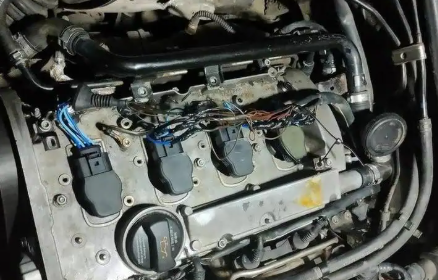
Key Takeaways:
- A spark plug doesn’t have to be completely dead to cause problems.
- Bad spark plugs are the #1 cause of premature catalytic converter failure.
- Always replace plugs as a complete set to maintain engine balance.
What Is a “Bad” Spark Plug?
A spark plug isn't just "good" or "broken." Failure usually happens in three stages:
- Performance-degraded: The gap has widened, requiring higher voltage to spark. You’ll feel a slight drop in MPG.
- Intermittent failure: The plug sparks most of the time but "blows out" under high load or humidity.
- Complete failure: Total misfire. Raw fuel enters the exhaust, risking a fire in the catalytic converter.
Understanding this prevents unnecessary replacements or missed problems.
Common Symptoms of a Bad Spark Plug
- Engine Misfire and Rough Idling
If your car feels like it's "stuttering" or "shaking" at a red light, a bad plug is the primary suspect. A misfire occurs when the plug fails to ignite the mixture, causing a temporary loss of power in that cylinder. - Loss of Acceleration (The "Heavy" Pedal)
Do you hear a struggling, deep-toned sound when accelerating? If the spark is weak, the combustion is slow, leading to a noticeable lag when you try to overtake. - Reduced Fuel Economy
If your "Miles Per Gallon" has suddenly dropped by 10-15%, your plugs may be "rounded off," forcing the engine to pump more fuel to maintain power. - Knocking, Pinging, or Abnormal Engine Sounds
Irregular combustion caused by misfires can sound like knocking, even when timing is correct. - Hard Starting or No Start
When spark energy drops below a usable threshold, cold starts become difficult or impossible.
What Does a Bad Spark Plug Look Like?
Visual cues are your best diagnostic tool.
- A good plug is light tan or gray with minimal deposits.
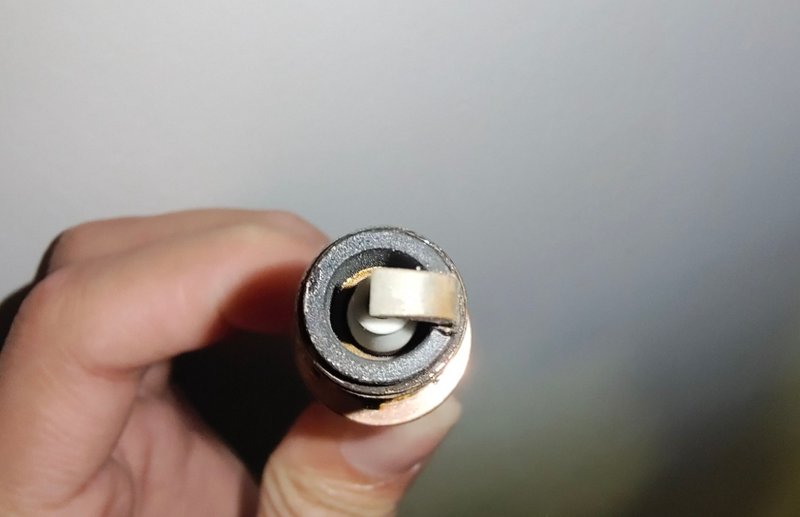
- A bad plug may appear abnormal discoloration, such as blackened (dry soot or oily coating), Bblistered white or pale gray (overheating) or physically damaged and excessive buildup.

Clear signs of failure include:
- Cracked or glazed porcelain insulator
- Eroded, melted, or broken electrodes
- Thick carbon, oil, or fuel deposits that cover the electrode gap
- Bad Spark Plug vs. Good Spark Plug (Side-by-Side Comparison Tip)
- Visual comparison across cylinders is often more revealing than isolated inspection.
A single abnormal plug often points to a cylinder-specific issue (e.g., a faulty injector or ignition coil), rather than a problem with the entire engine. Isolated inspection of one plug can lead to misdiagnosis.
Not sure whether your spark plug condition actually indicates a serious problem?
We recommend starting with our spark plug reading guide to understand what different colors and deposits really mean.
Bad Spark Plug Chart: Symptoms to Causes
| Symptom | Plug Appearance | Possible Cause | Severity | Can you keep driving? |
|---|---|---|---|---|
| Engine Misfire/Rough Idling | 1. Dry fluffy black soot
|
1. Rich air-fuel mixture
|
Medium | Only short distances (risk of catalytic converter damage) |
| Loss of Acceleration/Hesitation | 1. Oily black coating
|
1. Oil leakage (worn piston rings/valve guides)
|
High | No (risk of engine power loss mid-drive) |
| Reduced Fuel Economy | 1. Rounded/worn electrodes
|
1. Plug aging/wear
|
Low-Medium | Yes (but get it replaced soon to avoid further efficiency loss) |
| Knocking/Pinging Sounds | 1. Blistered/white insulator
|
1. Pre-ignition/detonation
|
High | No (risk of severe engine damage) |
| Hard Starting/No Start | 1. Wet, sooty deposits
|
1. Cold-start fuel enrichment fouling
|
Critical | No (engine cannot run reliably) |
How to Check If a Spark Plug Is Bad
- Visual Check (No Tools)
Look for damage, fouling, and uneven wear.
Normal sign: Light tan/grayish-brown insulator, minimal deposits, even electrode wear with no gaps larger than the manufacturer’s specification.
Faulty signs: Black dry soot, shiny oily coating, blistered white insulator, cracked porcelain, eroded/melted/broken electrodes, or deposits bridging the electrode gap.
Cylinder-to-cylinder comparison: Compare the plug to others from the engine. A single abnormal plug points to a cylinder-specific issue (e.g., faulty injector) rather than a universal plug problem.
- Swap Test (Cylinder-to-Cylinder)
Move the plug to another cylinder and see if the problem follows.
Identify the suspect cylinder: Use an OBD2 scanner to find which cylinder is misfiring (e.g., Cylinder 3).
Swap the spark plugs: Remove the spark plug from the suspect cylinder and swap it with a spark plug from a known good cylinder (e.g., swap Cylinder 3 and Cylinder 5 plugs).
Clear the fault code and test-drive the vehicle, then re-scan for misfire codes.
- Resistance Check (Multimeter — With Limits)
This test verifies the spark plug’s electrical continuity and catching internal failures that the eye can't see, such as a broken internal resistor, but cannot detect combustion-related faults like fouling or micro-cracks.
Prepare the plug: Clean and dry the spark plug thoroughly to avoid false readings from surface dirt.
Set up the multimeter: Switch the dial to continuity mode (marked with a sound wave symbol) or the lowest resistance setting (Ω).
Test the circuit: Touch one multimeter probe to the center electrode terminal (top metal post) and the other probe to the ground electrode strap (metal arm wrapping the insulator).
Interpret the result:
Good plug: The multimeter beeps, and the resistance reading is near 0 ohms (complete electrical path).
Bad plug: No beep, and the reading shows "OL" (open loop), indicating a broken electrode or internal circuit failure.
Critical limits note: A plug that passes the resistance test can still fail under engine load (e.g., due to fouling or micro-cracks). Always pair this test with a visual inspection.
Bad Spark Plug vs Bad Spark Plug Wires
This is a common "wallet trap": worn or faulty spark plug wires often mimic spark plug failure symptoms, and replacing the plugs alone won’t resolve misfires or performance issues if the wires are the root cause.
Bad Spark Plug Wires Symptoms include both engine performance issues and physical signs:
- Performance red flags: Persistent misfires, rough idle, sluggish acceleration, hard cold starts, or even random engine stutters—all symptoms that are easily mistaken for bad plugs.
- Physical giveaway: White "ash" marks on the wire surface—these are burn marks where voltage has leaked and jumped from the wire to the engine frame, robbing the plug of the spark it needs to ignite the air-fuel mixture.
When the plug is in good condition but the wire is faulty, replacing just the plug will waste time and money—the voltage leak will still prevent proper ignition.
Related Reading: A Comprehensive Guide to Spark Plug Wires: From Basics to Diagnosis
Can a Bad Spark Plug Trigger a Check Engine Light?
When a Code Points to Something Else
A misfire code doesn’t always mean the spark plug is the culprit—it can also flag related components that mimic plug failure:
- Faulty ignition coil/wire: Leaking voltage prevents the plug from firing, even if the plug itself is good.
- Clogged fuel injector: A blocked injector delivers too little fuel to the cylinder, causing a misfire that reads like a plug issue.
- Vacuum leak/mechanical fault: Issues like a leaking intake gasket or worn piston rings disrupt combustion, triggering the same misfire codes as a bad plug.
Before replacing spark plugs, confirming the true misfire source can save time and prevent unnecessary repairs.
For example, a P0303 code confirms a misfire in Cylinder 3 — but it doesn’t explain why.
Using a Foxwell diagnostic scanner (like GT60 or NT1009) that supports misfire counters, live data, and ignition-related parameters allows you to verify whether the spark plug is actually failing — or if the issue comes from the ignition coil, injector, or abnormal fuel trim behavior.
Special Cases: Small Engines & Lawn Mowers
How Long Can You Drive With a Bad Spark Plug?
Clean or Replace? Making the Right Decision
When Cleaning Spark Plugs Is Acceptable(Temporary Fix Only)
- Best for: Short-term use on lawn mowers, generators, or older carbureted engines.
- How to clean: Scrub deposits with a wire brush, remove carbon from the insulator nose with a spark plug cleaner tool, and reset the electrode gap to manufacturer specs.
- Critical note: Never clean oil-fouled or blistered plugs—deposits will return quickly, and cleaning won’t fix underlying mechanical issues (e.g., worn piston rings); Never use a wire brush on Iridium or Platinum plugs. These have a thin precious-metal coating; scrubbing them will strip the coating and ruin the plug instantly.
When Replacement Is the Only Smart Option(Recommended for Most Cases)
When to replace:
- Physical damage: Cracked porcelain, eroded/melted/broken electrodes, or a damaged thread.
- Severe fouling: Thick oily coating, heavy soot bridging the electrode gap, or blistered white insulator (signs of overheating).
- Age/wear: Reached the manufacturer’s service interval (e.g., 30,000 miles for nickel plugs, 60,000–100,000 miles for iridium/platinum plugs), or electrodes are rounded and worn.
- Performance issues: Misfires, rough idle, or a check engine light with P0300–P030X codes.
- Pro tip: Always replace spark plugs in a full set (for cars/trucks) to ensure consistent performance across cylinders.
Related reading: Understanding Long Term Fuel Trim (Bank 1) and How to Diagnose Issues
When the Spark Plug Is a Symptom, Not the Cause
Bad Spark Plug FAQs
Can bad spark plugs damage the engine?
Yes — while a single misfire won’t destroy the engine immediately, driving long-term with bad spark plugs can cause secondary damage.
Unburned fuel may overheat the catalytic converter, increase carbon buildup, and force the ignition and fuel systems to compensate. Over time, this can lead to reduced fuel economy, rough operation, and expensive emissions-related repairs.
Can one bad spark plug affect the whole engine?
Absolutely. Modern engines rely on balanced combustion across all cylinders.
A single faulty spark plug can cause engine vibration, uneven power delivery, and ECU fuel trim adjustments that affect overall performance — even if only one cylinder is misfiring.
Why does the car run fine sometimes?
Spark plug failures are often intermittent.
Heat, engine load, moisture, and RPM changes can temporarily mask ignition problems. That’s why a vehicle may idle roughly one day but feel normal the next — until the misfire becomes consistent.
Should all spark plugs be replaced together?
In most cases, yes. Spark plugs wear at similar rates. Replacing only one plug can create uneven ignition performance and lead to repeated labor costs. Unless the plugs are nearly new, replacing the full set is usually the smarter long-term decision.
What are the symptoms of bad spark plug wires?
When the Plug Is Fine but the Wire Is Not
A spark plug may appear normal, but degraded insulation or internal resistance in the wire can prevent consistent spark delivery. This is why visual inspection alone isn’t always enough.


Leave a comment
This site is protected by hCaptcha and the hCaptcha Privacy Policy and Terms of Service apply.