

Do you ever find yourself pulling the parking brake expecting it to secure tight, and it doesn't quite?
With an electronic parking brake (EPB, short for Electronic Parking Brake), this process may seem more complex, but don't fret—resetting manual or electronic parking brakes is easier than you think!
Resets ensure your car stays safely parked when needed most. Let's explore this further so your vehicle stays safely parked when required.
What Does It Mean to Reset the Parking Brake?
Resetting the parking brake means recalibrating the system that controls how your car locks into place when parked.
For manual parking brakes, this usually involves adjusting cable tension to secure a firmer hold; with electronic parking brake systems (EPB), resetting their control module can also do the trick.
Modern cars with EPB systems rely on sensors and software to engage and release the parking brake, much like how computers require restarts when their performance becomes slow or problematic.
Resetting such systems periodically or following brake maintenance could restore their proper function - just like rebooting a computer when something starts acting strangely; this simple action will often clear up minor problems quickly so everything runs more efficiently again.
Why Do You Need to Reset the Parking Brake?
You might think once your parking brake is set, it's done, but that isn't always the case.
After changing brake pads or making other alterations to your braking system, it needs to adjust accordingly, particularly with electronic systems that rely on precise calibrations to function effectively.
Resetting the parking brake allows the system to recalibrate, ensuring it will engage appropriately with any new components installed in your car.
Failing this action could result in issues like holding too tightly or failing to release completely and illuminated dashboard warning lights—all things that ensure your car remains stationary when parked.
Resetting ensures all systems stay in sync and that your car remains stable when parked.
How to Reset a Manual Parking Brake
Manual parking brakes may seem old-fashioned, but they are still effective, with easy adjustment methods like these:
- Check the Handle or Pedal: If your brake lever feels loose or your pedal goes down too far, an adjustment could be made.
- Locate the Adjustment Mechanism: This mechanism can usually be found near the base of the brake lever or rear wheel area; to access it, you may need to raise your car temporarily.
- Tighten the Cables: Using a wrench or pliers, adjust cable tension so that brake engagement occurs with only minimal lever pushes or pedal presses. Be careful not to overtighten, as this could cause them to drag.
- Testing It: To ensure the brake holds your car securely and releases smoothly, test and engage/depress the brake several times to ensure it functions as intended.
A properly adjusted manual parking brake should keep your car securely parked on hills without issue; however, additional adjustments or cable replacement may be required if that fails.
How to Reset an Electronic Parking Brake

Resetting an Electronic Parking Brake (EPB) Although resetting an EPB may sound complicated, with proper planning, it should be manageable. Here is what needs to happen:
- Start Your Engine but Don't Start the Engine: Switch on the ignition without starting your engine; this will power up the system so you can access EPB.
- Engage and Release the EPB: Fully engage the parking brake by pressing and releasing the EPB button, and repeat this step several times until your parking brake system has stabilized. Recalibration may also be required in certain vehicles to restore their optimal functioning.
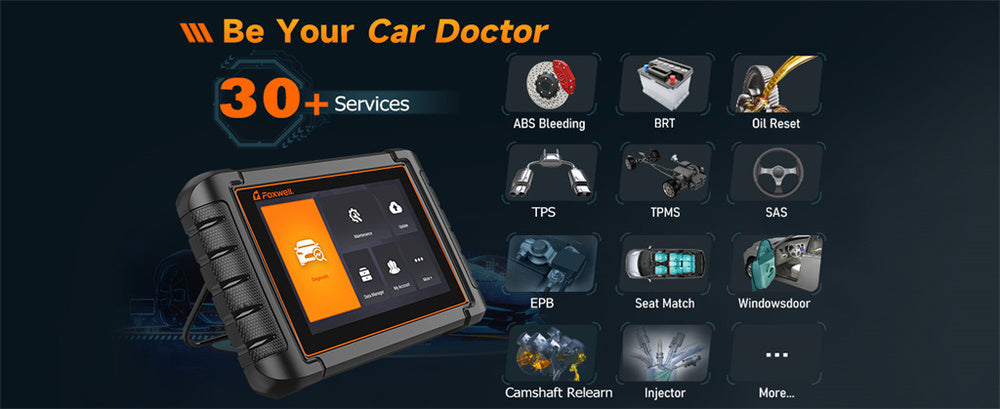
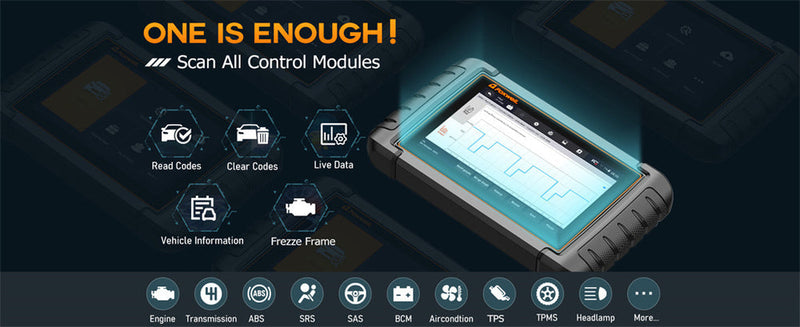
- Use a car Scanner Diagnostic Tool: If engaging and releasing doesn't do the trick, a diagnostic tool such as Foxwell NT710 could come in handy in helping reset EPB systems correctly. With direct communication between the EPB system and yourself, this device allows for optimal system reset.
Plug the NT710 into Your Car: Connect this tool to your OBD2 port underneath the dashboard for instantaneous testing of OBD2 devices in your vehicle.
Access the EPB System: Navigating to EPB settings via a touchscreen on the NT710 will give you access to an option to set or relearn the parking brake.
Reset Your EPB System: To reset the EPB system, follow the on-screen prompts to reactivate it. Since the NT710 supports bi-directional control, it can issue commands to reset or adjust the brake system.
- Follow Vehicle-Specific Instructions: Because every make and model may have specific instructions for resetting its EPB, refer to your vehicle manual for specific guidance.
Once reset, conduct a trial run by engaging and disengaging the EPB on an incline to ensure it secures the car securely.
Related Reading: Common Issues Solved by Electronic Parking Brake Scan Tools
When to Seek Professional Help for EPB Issues
Suppose the EPB refuses to reset properly, despite your best efforts, the dashboard light remains illuminated, or the brakes don't engage as expected.
In that case, professional assistance should be sought immediately.
A certified mechanic has the tools and expertise to diagnose and address these problems and restore functioning parking brakes to normality.
EPB Actuator Release and Full System Calibration
A standard EPB reset can restore normal operation in many cases, but some repairs require a complete actuator release and calibration procedure. After replacing brake pads, rear calipers, or the EPB actuator motor, the system must relearn the actuator's position to ensure proper engagement and release.
Step-by-Step EPB Actuator Calibration Procedure
1.Connect an EPB-compatible scan tool
Connect a diagnostic scanner (such as Foxwell NT710) to the vehicle's OBD2 port and select the correct vehicle make, model, and year.
2.Activate EPB service mode or actuator release
Enter the EPB or chassis system menu and select "Actuator Release," "Brake Pad Replacement Mode," or "Service Mode". This retracts the electronic parking brake actuator so the rear brake components can be serviced safely.
3.Complete mechanical repairs
Perform the required brake service, such as replacing brake pads, servicing calipers, or inspecting the EPB actuator.
4.Run EPB calibration or relearn
After repairs are complete, select "System Calibration," "Initialization," or "Relearn" in the EPB menu. This allows the control module to relearn the actuator's correct operating position.
5.Clear EPB-related fault codes
Read and clear stored DTCs from the EPB control module after calibration is completed.
6.Verify EPB operation
Turn the ignition on and cycle the EPB switch several times to confirm smooth engagement and release.
7.Perform a road test
Test the vehicle on a safe incline to verify that the parking brake holds correctly before returning it to normal operation.
How to Clear a Parking Brake Malfunction
A parking brake malfunction message does not always mean the EPB components have failed. Common causes include low battery voltage, interrupted actuator movement, incomplete calibration, or performing brake service without activating EPB service mode.
To clear a parking brake malfunction:
1.Scan the EPB system
Connect an EPB-compatible diagnostic scanner and read the parking brake system faults before attempting a reset.
2.Identify and fix the cause
Check common causes such as low battery voltage, wiring issues, EPB actuator problems, or incomplete service procedures.
3.Perform EPB reset or calibration
Use the scanner's EPB reset, actuator relearn, or calibration function to restore the correct actuator position.
4.Clear the fault message
Clear stored EPB faults from the control module after completing the repair or calibration procedure.
5.Verify normal operation
Cycle the electronic parking brake several times and confirm that the warning message does not return.
Pro Tips: If the parking brake malfunction message comes back immediately after clearing, the vehicle likely has an active EPB system fault that requires further diagnosis.
Is it Safe to Drive with an EPB Light On?
When the Electronic Parking Brake (EPB) warning light comes on, it’s more than just a suggestion—it’s your car telling you something may be wrong. Whether it's safe to continue driving depends on the light's status (steady or flashing) and specific fault symptoms. Here’s a comprehensive analysis and actionable advice to keep you safe:
| EPB Light Status | Meaning | Risk Level | Recommended Action |
|---|---|---|---|
| 🔴 Red (solid or flashing) | Severe EPB fault (e.g., actuator jam, control module failure) | High | Pull over immediately. Do not continue driving. Call for roadside assistance or towing. |
| 🟡 Yellow (solid) | Minor issue (e.g., sensor error, wiring problem) | Medium | If no brake performance issues, drive slowly to a nearby workshop. Avoid hills, heavy traffic, and sudden braking. |
Common Issues When Resetting a Parking Brake
Even with your best efforts, resetting your parking brake could prove challenging. Here are some issues to be wary of when trying to set it:
- Brake Won't Engage Properly: If the parking brake doesn't engage or release properly, this could indicate a problem with its brake actuator or sensors.
These electronic components may become obsolete and need replacing as they wear over time.
- Warning Lights Remain On: Even after resetting the system, EPB warning lights may remain illuminated due to deeper problems within your brake module or actuator.
- Stuck Brake: When your parking brake becomes stuck due to mechanical wear or electronic malfunction, professional assistance should be sought immediately to inspect and potentially replace faulty parts.
Resetting alone won't suffice in this instance.
Suppose the reset doesn't go as expected, or problems continue. In that case, it is wise to contact a mechanic to prevent further damage to the brake system.
Pro tips: Even with your best efforts, resetting your parking brake could prove challenging. Multiple distinct EPB fault conditions will trigger errors or warning lights, each with its own troubleshooting process, as detailed below.
EPB Not Working / No Response at All
Check, in order: the EPB fuse, battery voltage (a weak battery can prevent the actuator motors from drawing enough current), and the EPB switch for a mechanical/electrical fault. If all three check out and the system still doesn't respond, the control module or wiring harness is the next suspect.
Parking Brake Won't Engage or Won't Release
This is usually mechanical rather than electrical — worn brake pads changing the actuator's expected travel distance, a seized caliper piston, or a corroded cable on cable-actuated systems. This is also the most common trigger for needing a full recalibration after service, not just a reset.
Parking Brake Service Required/ Limited EPB Function
This message typically means the module has detected a fault but has placed the system into a limited/failsafe mode rather than failing completely. Treat it as "drive-in-for-diagnosis" territory rather than an emergency, unless paired with a solid red warning light (see the risk table above).
EPB Activation Stopped Incompletely
If the EPB engages or releases partway and then stops, this usually points to an obstruction at the actuator, a motor drawing insufficient current, or a calibration interrupted mid-cycle. The fix is almost always a full recalibration (see 3.3) rather than a simple reset.
EPB Reset Methods for Common Car Models (Lexus, Toyota, Mercedes-Benz)
The methods to reset the EPB system vary slightly depending on the car model, especially for popular brands like Lexus, Toyota, BMW, Audi, etc. Common fault messages such as “Parking brake not released” , "Electronic parking brake system fault" or “EPB malfunction” require different approaches depending on the vehicle.
Below is a summary of common EPB fault symptoms and recommended reset methods for popular brands. This is for reference only (applicable to most model years; please refer to the manufacturer’s manual for the latest models).
| Car Model | Common EPB Issues | Recommended Reset Method | Notes |
|---|---|---|---|
| Lexus | Parking brake malfunction, EPB warning light on | Use an OBD2 scanner with EPB reset function (e.g., Foxwell NT710) to clear codes and reset the system | Some models may require manual brake release before scanning |
| Toyota (incl. 2021 Corolla) | Parking brake malfunction, EPB service required | Disconnect the battery for 10 minutes, then use an EPB reset tool or scanner to recalibrate | Newer models often require scanner-based calibration |
| Mercedes-Benz | EPB fault, failure to release or engage | Use professional diagnostic equipment to reset EPB actuator and relearn settings | May require dealer-level tools for advanced programming |
| BMW | EPB malfunction warning, brake warning light | Use OBD2 diagnostic scanner with EPB function to perform reset and actuator test | Some models need battery voltage check before reset |
| Audi | Parking brake warning, EPB error | Use a compatible OBD2 scanner to clear fault codes and perform EPB reset procedure | May require brake pad adjustment before reset |
When performing actual repairs or operations, it is recommended to first refer to the vehicle's original factory repair manual (different vehicle models and model years have precise procedures for EPB reset in their respective manuals).
EPB Reset Procedures for Additional Car Brands
| Car Model | Common EPB Issues | Recommended Reset Method | Notes |
|---|---|---|---|
| Hyundai | EPB warning light, “Service Required” message | Use an OBD2 scanner with EPB reset function to clear faults and recalibrate the system | On older models, check the EPB switch and fuse if scanner reset does not resolve the issue |
| Kia | EPB malfunction, parking brake service message | Perform EPB reset and relearn using a compatible diagnostic scanner | Many Kia models share EPB system designs with Hyundai, so the reset process is similar |
| Mazda CX-5 | Parking brake malfunction, service required warning | Activate EPB service mode and perform scanner-based reset | Service mode is usually required before rear brake pad replacement |
| Acura MDX / TLX | Electric parking brake problem warning light, EPB malfunction | Read EPB fault codes and perform reset with an EPB-capable scanner | Electronic recalibration may be required after brake system repairs |
| Volvo Passenger Vehicles | “Parking Brake Service Required” message | Use manufacturer-compatible diagnostic functions to reset the EPB system | Reset is performed through the diagnostic menu |
| Volvo FH (Heavy Truck) | Electronic parking brake maintenance or fault issues | Use a heavy-duty truck diagnostic tool to access EPB maintenance functions | Volvo FH uses a different system from passenger vehicles; passenger-car reset procedures do not apply |
| Subaru | EPB cannot enter service mode during brake replacement, EPB warning light | Activate EPB service mode with a scanner, complete brake service, then perform relearn | Skipping service mode can damage the electronic brake actuator |
| Nissan | EPB service mode unavailable, parking brake warning | Enable service mode with a diagnostic scanner before brake work, then complete relearn | Similar workflow to Subaru models; scanner activation is commonly required |
| Jeep Compass | “Service Electronic Parking Brake” message, EPB fault | Perform battery reset first, then scan and clear EPB faults with relearn procedure | If the vehicle fails to start, check battery and ignition faults before diagnosing EPB |
| Chrysler Pacifica | “Service Park Brake” message | Use a diagnostic scanner to clear EPB codes and complete system relearn | Persistent faults may require actuator or wiring inspection |
| Mitsubishi Outlander | “Parking Brake Service Required” warning | Perform scanner-based EPB reset; battery disconnect can be used as a temporary workaround | Scanner reset is the recommended solution for most model years |
| Ford Fusion | “Parking Brake Malfunction Service Now” message | Check battery voltage, then perform EPB reset with a compatible scanner | Low battery voltage is a common cause of EPB initialization failure |
| Holden / Chevrolet VF Commodore | Intermittent electric handbrake engagement failure | Read EPB fault codes, perform reset, and inspect actuator if the issue returns | Mainly applies to Australia and New Zealand market vehicles |
| Renault Scenic | Emergency handbrake will not release, EPB fault | Follow manual emergency release procedure first, then perform scanner-based reset | Refer to the owner's manual before using the reset procedure |
Electronic Handbrake vs Manual Handbrake: Which Is Better?
Electronic handbrakes offer more convenience and better integration with modern vehicle safety systems, while manual handbrakes are simpler and easier to maintain.
An electronic handbrake (EPB) uses an electric motor and control module to apply the parking brake. It can automatically engage when the vehicle is parked, work with hill-start assist, and integrate with other driver assistance features. However, EPB systems require diagnostic tools for some repairs, especially after brake pad replacement or actuator service.
A manual handbrake uses a mechanical lever and cable system. It is simple, reliable, and easier to repair without special equipment, but it requires more driver input and does not offer advanced features like automatic engagement.
| Feature | Electronic Handbrake (EPB) | Manual Handbrake |
|---|---|---|
| Operation | Push-button control with electric actuator | Manual lever or pedal operation |
| Convenience | Automatic engagement and integration with safety systems | Requires manual operation |
| Maintenance | Requires EPB service mode and scanner for some repairs | Simple mechanical inspection and adjustment |
| Brake Pad Replacement | EPB reset/service mode may be required | Usually no electronic reset needed |
| Reliability | Depends on actuator, battery, and control module | Simple mechanical design |
| Space Saving | More compact, allows flexible interior design | Requires space for lever and cables |
Overall, electronic handbrakes are better for convenience, safety integration, and modern vehicle design, while manual handbrakes remain easier and cheaper to maintain. For vehicles equipped with EPB, using a compatible diagnostic scanner is essential when performing brake service, actuator replacement, or system calibration.
Service Electronic Parking Brake
●What triggers a "Service Electronic Parking Brake" message: low battery voltage, worn brake pads beyond the actuator's compensation range, a communication fault between modules, or an incomplete calibration after a repair.
●Routine EPB service checklist: brake pad thickness check, actuator current draw test, module fault code scan, full calibration/relearn, and a functional test (engage/release cycles + incline hold test).
●Recommended service interval: EPB-specific service is typically tied to brake pad replacement intervals rather than a fixed mileage — service it whenever the pads are serviced, and any time the warning light appears.
Conclusion
Resetting your parking brake, whether manual or electronic, is a straightforward process that can address many common issues like loose engagement or jammed brakes.
Resetting is essential after regular brake maintenance to ensure your car can park safely when required.
Manual parking brakes involve adjusting cable tension, while electronic parking brakes (EPBs) might need the Foxwell NT710 for reset purposes.
If the reset fails or continues malfunctioning, it's best to consult a professional, as keeping your parking brake in good condition is vital in ensuring vehicle safety and reliability!
FAQs
How to fix an electronic parking brake malfunction?
To fix an electronic parking brake malfunction, start by turning the ignition off and then back on to reset the system. If the issue persists, check for any blown fuses or wiring issues related to the EPB system. If necessary, use an OBD2 scanner to read any error codes and reset the system. If these steps don’t resolve the problem, professional help may be required to inspect the brake actuators or control module.
How do I reset my brake warning?
You can reset a brake warning light by first checking the brake fluid levels, as low fluid often triggers the light. If fluid levels are fine, turn the car off and back on to see if the light resets. For more complex vehicles, an OBD2 scanner can help clear the warning after resolving any issues like worn brake pads or faulty sensors.
How do you reset brake override?
To reset the brake override system, you’ll need to first ensure there are no underlying brake or throttle issues. Then, turn off the vehicle and disconnect the battery for a few minutes. Reconnect the battery and start the vehicle. If the override light is still active, you may need to consult your vehicle’s manual or use an OBD2 scanner to clear any stored codes related to the system.
How to reset emergency brake light?
Noticed your emergency brake light just won’t go off? Here’s a step-by-step troubleshooting plan:
- Check the parking brake: Make sure it’s fully disengaged. Even a slightly engaged lever or pedal can trigger the light. Try pressing and releasing it a few times.
- Inspect brake fluid levels: Open the hood and check if the brake fluid is below the "MIN" line. Low fluid is a common cause of the emergency brake warning light.
- Scan for electronic faults: For vehicles with EPB systems, use an OBD2 diagnostic tool like the Foxwell NT710 to scan and clear any stored fault codes that might be causing the warning.
- Seek professional diagnosis if needed: If the light remains on, the issue might involve a faulty brake switch, cable wear, or a malfunctioning actuator. In such cases, professional inspection is recommended.
What does retract park brakes mean?
“Retract” refers to the actuator motors pulling the caliper pistons back to their fully released position — the state the EPB needs before brake pads can be safely replaced, which is why most scan tools have a dedicated "retract"/"service mode" function for this step.
What Does Brake Service Required Mean?
A “Brake Service Required” message means the vehicle detected an issue with the brake or electronic parking brake (EPB) system. Common causes include low battery voltage, EPB actuator faults, or a missed EPB service mode procedure after brake pad replacement. Use an EPB-compatible scanner to check faults and perform a reset or calibration if needed.
How can I put my Kia Sportage or Sorento into service mode for the parking brake?
To put a Kia Sportage or Sorento electronic parking brake (EPB) into service mode, connect an EPB-compatible OBD2 scanner, access the EPB system menu, and select the Brake Pad Replacement Mode / Service Mode function. This retracts the EPB actuator so rear brake pads or calipers can be serviced safely. After repairs, run the EPB reset or calibration procedure to restore normal operation.

Leave a comment
This site is protected by hCaptcha and the hCaptcha Privacy Policy and Terms of Service apply.