

Have you ever experienced that familiar feeling of alarm when the "Check Engine" light illuminates your dashboard?
OBD2 is here to help! It is built into most modern cars and provides an invaluable service that allows you and your mechanic to understand what is happening beneath the hood.
We'll look at what OBD2 compliance means and why it is crucial for vehicle health.
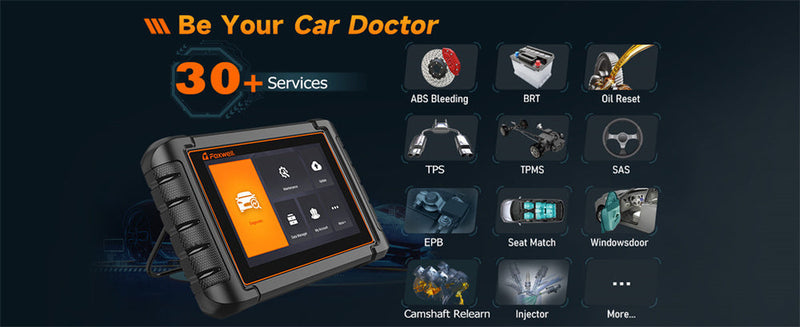
Additionally, we will highlight the Foxwell NT1009 diagnostic scan tool as an efficient device to maintain car maintenance across models makes and models.
What Is OBD2 Compliance and Why Does It Matter?
You may have heard of OBD2, mainly if you deal with car maintenance or repairs. But what exactly does it entail?
OBD2 acts like your car's onboard doctor by monitoring its engine, other vital parts and overall health status - notifying you when anything seems amiss- usually via that familiar "Check Engine" light on your dashboard if anything seems off.
But why should OBD2 compliance matter to you? Without OBD2, diagnosing issues and passing emissions tests can be a nightmare.
Without clues as to what the issue might be, diagnosing problems becomes near impossible without OBD2, making the process faster, cheaper, and less stressful overall.
How to Determine If Your Car is OBD2 Compliant
It's easier than you think to determine its compliance!
First, look at its model year - in the U.S., cars made after 1996 are likely OBD2 compliant, while European regulations mandate compliance with OBD2 standards by 2001 for gasoline and 2004 for diesel engines.
But if you're uncertain of your car's exact year of manufacture, here's an easy trick to help you identify it: Look under the dashboard near the steering wheel for a port that resembles a 16-pin connector.
This should indicate whether your vehicle meets OBD2 compliance.
How to Identify Your Car’s OBD Type
| Identification Method | OBD2 Indicators | OBD1 / Other Indicators | Notes |
|---|---|---|---|
| Check the model year | U.S.: 1996+ Europe Gasoline: 2001+ Europe Diesel: 2004+ | Older cars before above years | Years may vary in other regions; check local regulations |
| Diagnostic port | 16-pin connector under dashboard near steering wheel | Smaller connectors, often under the hood | Connector shape and pin count helps identify OBD type |
| Owner's manual / certification | Manual lists OBD2 compliance, CAN / ISO / SAE protocols | Manual may indicate OBD1 or proprietary protocols | High-end/specialty cars may use manufacturer-specific systems |
| Using an OBD scanner | Basic OBD2 scanner retrieves codes | Scanner fails or only manufacturer-specific tools work | Confirms compatibility and helps pick the right tool |
What Years does OBD2 Cover?
In the U.S., vehicles manufactured after 1996 support OBD2. European gasoline cars comply from 2001, and diesel cars from 2004. Other regions may vary, so always check your local regulations.
Key Indicators of OBD2 Compliance in Your Vehicle

Multiple indicators can help confirm that your car complies with OBD2, including:
- Manufacturing Year: If your car was manufactured after 1996 in the U.S. or 2001/2004 in Europe, it's likely OBD2 compatible.
- OBD2 Label: Look under your hood or near the engine for a label stating it complies with OBD2 standards.
- Diagnostic Port: If your dashboard contains a 16-pin connector, that indicates compliance.
- Check Engine Light: A "Check Engine" light usually links back to OBD2, providing early notification of issues within your emissions system.
These signs act like breadcrumbs leading you to your answer - follow them, and you'll discover if your car meets OBD2 specifications.
Steps for Checking OBD2 Compliance
Are You Ready to Check OBD2 Compatibility on Your Car
Here's How:
- Checking Your Car's Date of Manufacture: Look for its VIN plate near the windshield or inside its driver door frame; this will tell you the year your car was manufactured.
- Locate OBD2 Port: To locate this, look under your dashboard near its pedals for 16-pin OBD2 ports near these areas - these could indicate whether your car needs repair.
- Referring to the User Manual: Your car's manual should outline OBD2 compliance and describe where its diagnostic port can be found.
- Employ an OBD2 Scanner: Plug it in; if it reads data, then your vehicle is OBD2-compliant.
Follow these steps like a checklist, and you'll quickly see whether your car meets all necessary standards.
Does OBD2 Scanner Work on All Cars?
Most OBD2 scanners work with cars that meet the OBD2 standard. Older vehicles or models with proprietary systems may not be compatible. Always verify scanner compatibility with your car’s make, model, and year before use.
-
1. When OBD2 scanners DO work
- All gasoline cars and light trucks in the U.S. built 1996 or later
- Most European, Asian, and domestic brands (Ford, GM, Toyota, Honda, Nissan, etc.)
- Read basic codes: P0011, P0171, P0420, check engine light, sensors, misfires
- All use the same 16-pin OBD2 port
-
2. When OBD2 scanners DO NOT fully work
- Cars before 1996: use OBD1, different connectors and protocols
- Heavy-duty diesel trucks: often use J1939 instead of standard OBD2
- Electric vehicles (EVs): OBD2 port exists but shows very limited data
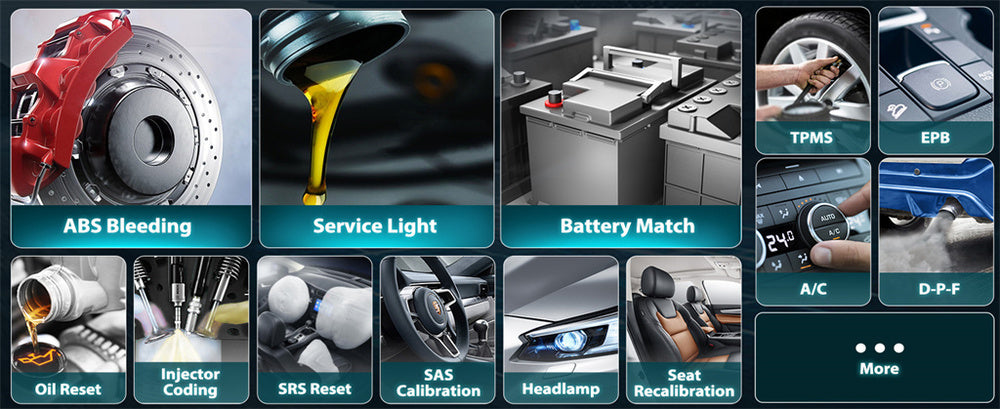
- Brand-specific systems:- Transmission, ABS, airbag, battery, 4WD
Special functions: reset, adaptation, coding, bi-directional tests
- - These require manufacturer-capable scanners, not basic OBD2 tools.
- Transmission, ABS, airbag, battery, 4WD
-
3. Final Takeaway
- Basic code reading: Yes, OBD2 scanner works on almost all modern cars.
- Full-system diagnostics: No, you need a professional or brand-specific tool.
OBD2 Can Provide Valuable Support in Vehicle Maintenance
OBD2 isn't just helpful in meeting regulations - it also plays an invaluable role in vehicle maintenance. Here's how:
Emission Testing: OBD2 monitors your car's emissions to ensure it runs cleanly, essential to passing emissions tests. If anything seems amiss, OBD2 will notify you quickly so you have enough time to address it and fix it before an emissions test occurs.
Diagnostic Trouble Codes (DTCs): Diagnostic trouble codes are generated when something goes wrong with the OBD2 system, allowing a mechanic to address repairs more quickly and precisely. These DTCs pinpoint where repairs need to be performed more quickly.
Real-Time Data Monitoring: OBD2 provides real-time information about engine performance, such as fuel economy and temperature. Think of it like having a health monitor for your car to identify issues when they arise quickly.
Monitoring Your Vehicle Health: Some advanced OBD2 systems can predict issues before they become major, potentially saving you from expensive repairs.
Understanding OBD2 Compliance for Emission Testing
Compliance with OBD2 is vital for emission testing in many regions, where vehicles must pass this exam to remain road-legal.
When running such an emission test, OBD2 scans for active Diagnostic Trouble Codes (DTCs) related to your car's emissions system.
Any faults detected could force failure and require repairs before legal driving again.
OBD2 monitors your vehicle's emissions, detecting problems such as a failing catalytic converter early.
By identifying these issues early, OBD2 helps keep your car running efficiently while reducing environmental impact.
Complying with OBD2 requirements is not just about meeting legal requirements; it is also about maintaining its health and performance.

Extensive Vehicle Compatibility of the Foxwell NT1009 Diagnostic Tool
The Foxwell NT1009 diagnostic tool was designed with broad vehicle compatibility, making it an excellent option for professional mechanics and car enthusiasts.
This versatile device supports luxury brands like Audi, Bentley, BMW, and Tesla while still being suitable for more common mainstream brands such as Toyota, Honda, Ford, etc.
But the NT1009 goes beyond simple everyday cars; it also supports specialty and high-performance brands like Ferrari, Lamborghini, Bugatti and Porsche - perfect for exotic car owners needing reliable diagnostics for their prized rides.
Furthermore, the tool works with other global brands, including Mahindra Tata Maruti Maruti from India and Hyundai Kia Daewoo from Asia - providing reliable diagnostics solutions across multiple vehicle brands.
Whether for Chrysler, Jeep, G.M. from the American market or Citroen Peugeot Renault from the European market, Foxwell's NT1009 diagnostic device covers it all!
Thanks to its comprehensive compatibility, it is an invaluable asset when working with multiple vehicle types across different brands.
It is explicitly designed to become your go-to diagnostic device regardless of what vehicle type or brand you drive.
Brand & Model Coverage
The Foxwell NT1009 supports a wide range of vehicles, from mainstream brands like Toyota, Ford, and Honda to high-end models like Porsche, Ferrari, and Lamborghini. Check your vehicle’s certification documentation for OBD2 compliance if needed.
Conclusion
Understanding OBD2 compliance is vital to keeping your vehicle healthy, passing emissions tests, and operating without issues.
The Foxwell NT1009 diagnostic tool adds convenience and reliability, boasting broad compatibility across various vehicle brands, from luxury exotic cars to daily household names.
By harnessing OBD2 technology along with this tool, you can easily monitor vehicle performance while early detecting issues and make informed decisions regarding repairs - regardless of whether you're an auto professional or want to take better care of your car - knowing about OBD2 compliance can make a substantial impactful difference!
FAQs
Are OBD2 scanners compatible with all cars?
No, OBD2 scanners are generally compatible with cars made after 1996 in the U.S., after 2001 for gasoline cars in Europe, and after 2004 for diesel cars. Vehicles made before these years typically do not support OBD2.
Do OBD2 scanners work on older cars?
OBD2 scanners do not work on most cars made before 1996 in the U.S. or before 2001/2004 in Europe. Older vehicles may use the OBD1 system or other proprietary diagnostic systems.
What car model years can you check with OBD-II?
OBD-II can check cars made from 1996 onward in the U.S., 2001 for gasoline cars and 2004 for diesel cars in Europe, and similar years for other regions depending on local regulations.
What cars don’t use OBD2?
While OBD2 is the universal standard today, the following vehicles typically do not support it:
- Classic & Vintage Cars: Most vehicles manufactured before 1996 in the U.S. or before 2001/2004 in Europe.
- Pre-Standard Imports: JDM (Japanese Domestic Market) vehicles prior to 2002 often use brand-specific protocols.
- Heavy-Duty Equipment: Large commercial trucks and tractors usually use the J1939 protocol with a round diagnostic port instead of the 16-pin OBD2 port.
- The "OBD 1.5" Oddities: Some 1994–1995 models have an OBD2-style plug but lack the software compatibility, requiring specialized dealer tools to scan.
What year cars are OBD1?
OBD1 was the fragmented predecessor to the modern standard. The timeline for OBD1 varies by region:
- United States: Most vehicles produced from 1981 to 1995. After January 1, 1996, all cars sold in the U.S. were required to be OBD2.
- Europe (EOBD): Gasoline cars before 2001 and diesel cars before 2004 are typically OBD1 or proprietary.
- How to Confirm: Check the VECI label under the hood. If it does not explicitly state "OBD II Compliant," the vehicle is likely an OBD1 system.

Leave a comment
This site is protected by hCaptcha and the hCaptcha Privacy Policy and Terms of Service apply.